Rockwool Hydroponic Cubes | Best Hydroponics
Rockwool hydroponic cubes are versatile growing mediums made from molten rock spun into fibers, offering numerous benefits for soilless cultivation. These cubes provide an ideal balance of water retention and aeration, promoting healthy root growth. Available in various sizes, they suit different plant types and growth stages. Setting up a Rockwool system is simple, requiring minimal equipment and maintenance. The cubes support various growing techniques and are excellent for seed starting and transplanting.
While Rockwool offers advantages like sterility and uniformity, it also has downsides such as initial cost and environmental concerns. Ongoing research focuses on improving sustainability and developing smart cube technologies. Despite challenges, Rockwool remains popular in both small-scale and commercial hydroponics due to its efficiency and ease of use. As hydroponic technology advances, Rockwool continues to evolve, meeting the changing needs of growers while addressing environmental considerations.
#1 Recommended Hydroponic Smart Kit | #2 Recommended Hydroponic Smart Kit |
 |  |
Rockwool Hydroponic Cubes: A Comprehensive Guide to Efficient Soilless Growing
Rockwool hydroponic cubes have revolutionized the way we approach soilless cultivation. These versatile growing mediums, initially developed for insulation in the 1960s, have found a crucial place in modern horticulture. Made from molten rock spun into cotton candy-like fibers, Rockwool cubes offer a unique blend of properties that make them ideal for hydroponic systems.
The Manufacturing Process and Composition
The production of Rockwool involves melting a mixture of rock, typically basalt, and chalk at temperatures exceeding 1600°C. This molten material is then spun into fibers and compressed into various shapes and sizes suitable for plant growth. The result is a sterile, inert medium with a balanced structure that provides excellent water retention and aeration.
Advantages of Rockwool in Hydroponics
Rockwool’s popularity in hydroponics stems from its numerous benefits:
- Inert Nature: Rockwool doesn’t interact with nutrient solutions, ensuring that plants receive precisely what growers intend.
- Excellent Water Retention and Aeration: The fiber structure holds water while allowing ample oxygen to reach the roots, creating an ideal environment for root development.
- Sterility: Rockwool comes pre-sterilized, reducing the risk of soil-borne diseases and pests.
- Uniformity: Each cube provides consistent growing conditions, leading to more predictable and manageable plant growth.
- Modularity: The cube format allows for easy transplanting and system reconfiguration.
- pH Stability: Once properly prepared, Rockwool maintains a stable pH, reducing the need for constant adjustments.
Types and Sizes of Rockwool Cubes
Rockwool cubes come in various sizes to accommodate different growth stages and plant types:
- Small Cubes (1.5″ – 3″): Ideal for seed starting and propagation.
- Medium Cubes (4″ – 6″): Perfect for supporting mature plants in long-term cultivation.
- Large Slabs and Sheets: Suitable for commercial operations and larger plants.
Choosing the right size is crucial for optimal plant growth. Larger cubes provide more stability and nutrient retention for bigger plants, while smaller cubes are efficient for starting seeds and young plants.
Setting Up a Rockwool Hydroponic System
One of the most appealing aspects of Rockwool cultivation is its simplicity. A basic setup requires minimal equipment compared to other hydroponic methods. Here’s a quick guide to getting started:
- Prepare the cubes by soaking them in pH-adjusted water (aim for a pH of 5.5-6.5).
- Set up a simple nutrient management system, which can be as basic as a reservoir with a nutrient solution.
- Ensure proper environmental controls, including adequate lighting and airflow.
- Plant seeds or cuttings directly into the prepared cubes.
This simplicity makes Rockwool systems accessible to both beginners and experienced growers, allowing for easy scaling from small home setups to larger operations.
Growing Techniques and Best Practices
Rockwool cubes support various growing techniques:
- Seed Starting: Small cubes are excellent for germinating seeds.
- Transplanting: Plants started in small cubes can be easily transferred to larger ones as they grow.
- Direct Planting: Mature plants can be grown directly in appropriately sized cubes.
- Watering and Feeding: Methods include dipping the cubes in nutrient solution or top watering, depending on the setup and plant needs.
Different plant types, from leafy greens to fruiting plants, thrive in Rockwool with proper management. Lettuce and herbs do well in smaller cubes, while tomatoes and peppers benefit from larger ones.
Maintenance and Troubleshooting
Maintaining a Rockwool system involves regular monitoring of water and nutrient needs. Here are some key considerations:
- Prevent algae growth by minimizing light exposure to the cubes.
- Address nutrient deficiencies and pH imbalances promptly.
- Monitor EC (Electrical Conductivity) levels to ensure proper nutrient concentration.
- Take advantage of natural root pruning that occurs as roots reach the cube’s edges.
One unique benefit of Rockwool is its ability to facilitate “air pruning” of roots. As roots reach the edges of the cube, they are naturally pruned by exposure to air, promoting a healthier, more branched root system.
Comparison with Other Hydroponic Methods
Rockwool cultivation shares simplicity with methods like the Kratky technique but offers more control over the root environment. Compared to soil, it provides cleaner growing conditions and reduces the risk of soil-borne diseases. While the initial cost of Rockwool cubes may be higher than some alternatives, their reusability and low maintenance requirements can offset this over time.
Long-term Considerations and Environmental Impact
While Rockwool offers many benefits, it’s important to consider long-term factors:
- Reusability: Cubes can potentially be reused, though this requires careful cleaning and sterilization.
- Salt Accumulation: Over time, salts may build up, necessitating occasional flushing.
- Environmental Concerns: The production of Rockwool is energy-intensive, and the material is not biodegradable.
These environmental considerations have led to ongoing research into more sustainable alternatives and improvements in the production process.
Case Study: Home Rockwool Hydroponic Setup
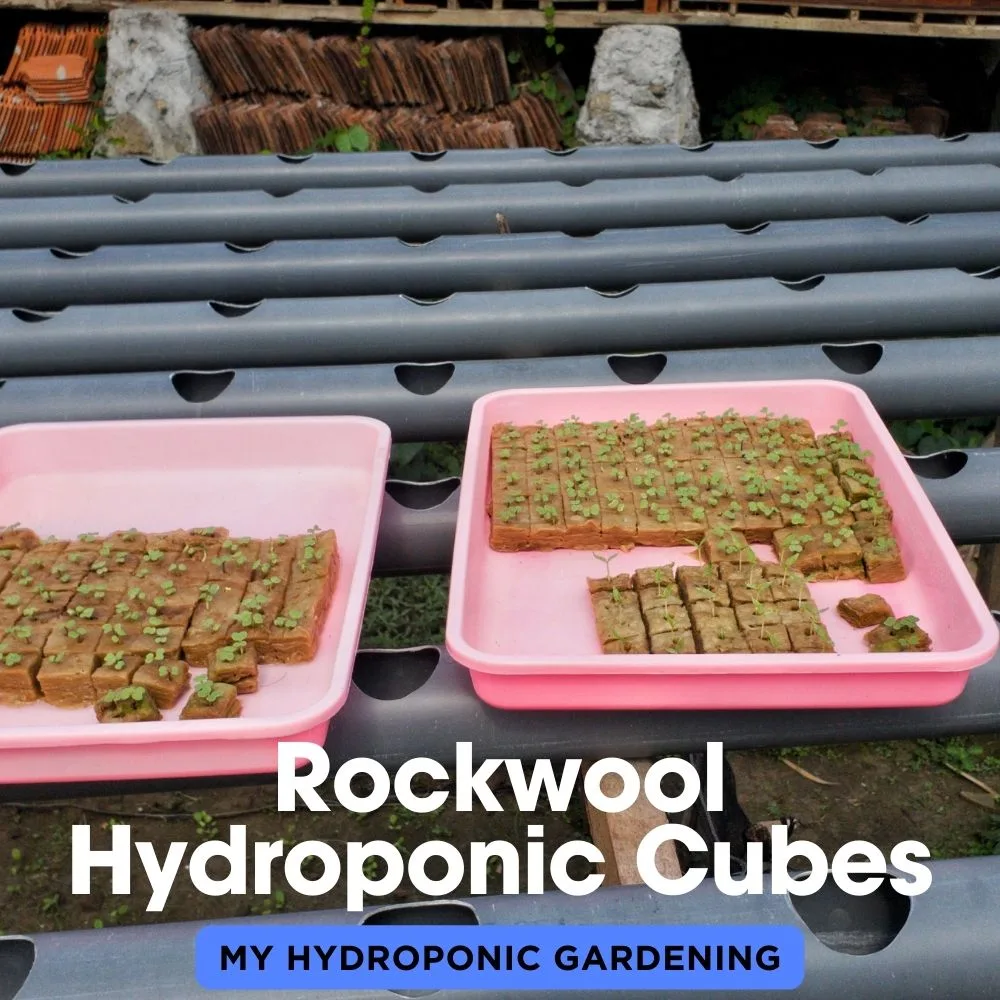
A typical home Rockwool system might consist of a collection of 4″ cubes on a tray with LED grow lights. Such a setup can support a variety of plants, from herbs to small fruiting plants like cherry tomatoes or peppers. Maintenance might involve weekly applications of nutrient solution and periodic pH checks.
Growers often report impressive yields for the space used, with key lessons revolving around optimizing cube sizes for different plant types and managing watering frequency. Many find that Rockwool systems require less frequent watering than soil, reducing daily maintenance needs.
Advanced Applications and Future Trends
The use of Rockwool in commercial hydroponics is expanding, particularly in large-scale greenhouse operations and vertical farming. Its lightweight nature and water efficiency make it ideal for these applications. Current research focuses on improving Rockwool’s environmental profile and enhancing its properties for specific crop types.
Future trends may include:
- Development of biodegradable Rockwool alternatives
- Smart cubes with integrated sensors for precision agriculture
- Enhanced formulations for specific plant types or growing conditions
Downsides and Considerations
While Rockwool offers numerous advantages, it’s important to note some potential downsides:
- Initial Cost: Rockwool cubes can be more expensive than soil or some other hydroponic mediums.
- Environmental Impact: The production process is energy-intensive, and the material is not biodegradable.
- pH Management: New Rockwool requires careful pH adjustment before use.
- Disposal: Used Rockwool can be challenging to dispose of in an environmentally friendly manner.
- Drying Risk: If the watering system fails, Rockwool can dry out quickly, potentially stressing plants.
- Learning Curve: First-time users may need to adjust to the unique properties of Rockwool compared to soil.
Conclusion
Rockwool hydroponic cubes offer a blend of simplicity, efficiency, and versatility for hydroponic growers. Their ability to provide an ideal root environment, coupled with ease of use and scalability, makes them a popular choice for both hobbyists and commercial growers. While there are considerations regarding cost and environmental impact, the benefits in terms of plant health, space efficiency, and ease of use are significant.
As hydroponic technology continues to advance, Rockwool is likely to remain a key player in the industry. Ongoing research and development are focused on addressing its limitations, particularly in terms of sustainability. For growers looking to explore or expand their hydroponic endeavors, Rockwool cubes provide a reliable, high-performance medium that can support a wide range of plants and growing styles.
#1 Recommended Hydroponic Smart Kit | #2 Recommended Hydroponic Smart Kit |
| | |
Summary and FAQs
How do I prepare Rockwool cubes for planting?
To prepare Rockwool cubes for planting:
- Soak the cubes in pH-adjusted water (aim for a pH of 5.5-6.5).
- Use a mild nutrient solution (about 1/4 strength of what you’d use for mature plants).
- Allow the cubes to drain excess water before planting.
- Avoid compressing the cubes, as this can reduce aeration.
Can Rockwool cubes be reused?
While it’s possible to reuse Rockwool cubes, it’s generally not recommended due to potential disease transmission and reduced effectiveness. If you choose to reuse:
- Remove all old root material.
- Sterilize the cubes using a diluted hydrogen peroxide solution or by baking them at a low temperature.
- Be aware that the structure may be compromised, affecting water retention and aeration.
How often should I water plants in Rockwool cubes?
Watering frequency depends on various factors including plant size, environmental conditions, and cube size. Generally:
- For seedlings, keep the cube moist but not waterlogged.
- For mature plants, water when the cube feels light or slightly dry on top.
- In hot conditions, you may need to water daily or even multiple times per day.
- Use the weight of the cube as a guide – a light cube needs watering.
Are there any health or safety concerns when handling Rockwool?
While Rockwool is generally safe, there are some precautions to take:
- Wear gloves and a dust mask when handling dry Rockwool to avoid skin irritation and inhalation of fibers.
- Work in a well-ventilated area.
- Avoid breaking or crushing the cubes, which can release fibers.
- Once wet, Rockwool poses minimal risk.
What are the best plants to grow in Rockwool cubes?
Rockwool cubes are versatile and can support a wide range of plants. Some of the best options include:
- Leafy greens like lettuce, spinach, and kale.
- Herbs such as basil, cilantro, and mint.
- Fruiting plants like tomatoes, peppers, and cucumbers (in larger cubes).
- Flowers, both ornamental and edible. The key is matching the cube size to the plant’s needs and growth stage.