Coco Coir Soil For Hydroponic | Best Hydroponics
Coco coir, a byproduct of coconut processing, has emerged as a popular and eco-friendly alternative to traditional soil-based growing media. This versatile substrate offers excellent water retention, good aeration, and natural pest resistance, making it suitable for a wide range of plants and growing systems, including hydroponics. While coco coir is inert and requires careful nutrient management, its pH neutrality and reusability offer significant advantages. Compared to traditional soil and peat moss, coco coir is generally more sustainable, being derived from a renewable resource and having a lower environmental impact.
However, considerations such as transportation and processing methods can affect its overall eco-friendliness. As of 2024, ongoing research and development continue to improve coco coir’s properties and production methods, further enhancing its potential as a sustainable growing medium. Despite some challenges, coco coir’s benefits often outweigh its limitations, making it an increasingly popular choice for both hobbyist gardeners and commercial growers seeking sustainable alternatives.
#1 Recommended Hydroponic Smart Kit | #2 Recommended Hydroponic Smart Kit |
 |  |
Coco Coir: A Sustainable Alternative to Traditional Soil-Based Growing
In recent years, the gardening and agricultural world has seen a surge in the popularity of coco coir as an alternative to traditional soil-based growing. This eco-friendly medium, derived from coconut husks, offers a range of benefits that appeal to both hobbyist gardeners and commercial growers. As we navigate the challenges of sustainable agriculture and urban gardening, coco coir presents itself as a versatile and environmentally conscious choice.
What is Coco Coir?
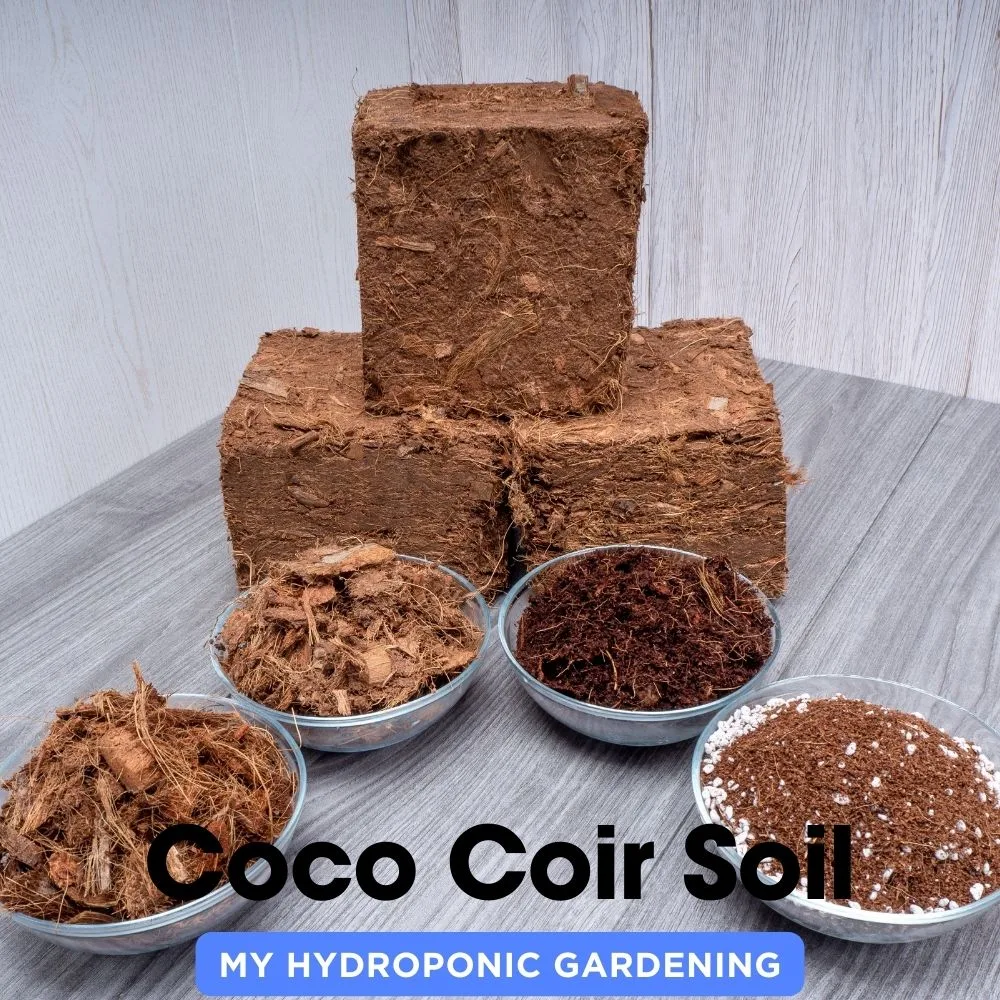
Coco coir, often simply called coir, is the fibrous material found between the hard, internal shell and the outer coat of a coconut. Once considered a waste product in coconut processing, coir has found new life as a horticultural medium. It comes in various forms, including coco peat (fine particles), coco fiber (stringy particles), and coco chips (larger chunks).
The journey from coconut husk to gardening medium involves several steps. After harvesting, the husks are soaked in water to soften and separate the fibers. This process can take several months. The coir is then dried, processed, and sometimes treated to remove excess salts and balance pH levels. The result is a lightweight, water-retentive medium that’s ready for plant growth.
Benefits of Coco Coir
Water Retention and Aeration: One of coco coir’s standout features is its excellent water retention capacity. It can hold up to 10 times its weight in water, ensuring that plant roots have consistent access to moisture. Despite this water-holding ability, coco coir also provides good aeration, striking a balance that many plants thrive in.
pH Neutrality: Unlike peat moss, which is acidic, coco coir has a near-neutral pH (typically between 5.5 and 6.8). This makes it suitable for a wide range of plants without requiring significant pH adjustments.
Root Development: The structure of coco coir encourages strong root growth. Its ability to retain water while still allowing air pockets creates an ideal environment for roots to expand and develop.
Sustainability: As a byproduct of coconut processing, coco coir is a renewable resource. It’s biodegradable and can often be reused, making it a more sustainable choice compared to peat moss, which is harvested from increasingly threatened peat bogs.
Pest Resistance: Coco coir naturally resists many common garden pests, reducing the need for chemical pesticides.
Versatility: It can be used in various growing systems, from traditional pots to hydroponic setups, making it a versatile choice for different gardening methods.
Coco Coir in Hydroponic Systems
The use of coco coir in hydroponics has gained significant traction. Its ability to retain nutrients while providing excellent aeration makes it an ideal substrate for hydroponic systems. Many growers use it as a standalone medium or mix it with other substrates like perlite for enhanced drainage.
In hydroponic setups, coco coir serves as an inert medium, meaning it doesn’t provide nutrients itself but excellently supports the nutrient solution delivery to plant roots. This characteristic allows for precise control over plant nutrition, a key advantage in hydroponic growing.
Comparing Coco Coir to Traditional Soil
While coco coir shares some characteristics with soil, there are notable differences:
- Nutrient Content: Unlike soil, coco coir is essentially inert and doesn’t contain nutrients. This means all plant nutrition must be provided through fertilization.
- Water Management: Coco coir retains water more efficiently than most soils, which can be both an advantage and a challenge, depending on the plant’s needs.
- Reusability: Coco coir can often be reused for multiple growing cycles, whereas soil typically needs more frequent replacement or amendment.
- Weight: Coco coir is significantly lighter than soil, making it easier to handle, especially in container gardening or rooftop gardens.
- Environmental Impact: While soil mining can have negative environmental impacts, coco coir utilizes a waste product, potentially reducing overall environmental harm.
Challenges and Considerations
Despite its many benefits, coco coir isn’t without challenges:
- Nutrient Management: As an inert medium, all nutrients must be supplied. This requires careful management of fertilization schedules and potential supplementation with calcium and magnesium.
- Initial Preparation: Most coco coir products come in compressed bricks that need hydration before use, which can be time-consuming.
- Salt Content: Depending on the processing method, some coco coir may have high salt content, necessitating thorough rinsing before use.
- Cost: High-quality coco coir can be more expensive than basic potting soil, although its reusability can offset this cost over time.
- Learning Curve: For those accustomed to soil gardening, there may be a learning curve in managing water and nutrients in coco coir.
Recent Developments and Future Prospects
As of 2024, research into coco coir continues to evolve. Recent studies have focused on enhancing its properties through various treatments and exploring its potential in vertical farming systems. Some developments include:
- Improved Buffering: New processing techniques have improved coco coir’s ability to manage nutrient exchange, reducing the risk of nutrient lockout.
- Blended Products: Manufacturers are creating specialized coco coir blends, incorporating beneficial microorganisms or other substrates to enhance growing conditions.
- Sustainable Processing: Efforts are being made to make coco coir production more sustainable, including using renewable energy in processing and improving water recycling methods.
- Urban Agriculture: Coco coir’s lightweight nature and excellent water retention make it increasingly popular in urban agriculture projects, including rooftop gardens and indoor vertical farms.
Conclusion
Coco coir represents a significant step forward in sustainable growing media. Its numerous benefits, including excellent water retention, good aeration, and environmental sustainability, make it a compelling alternative to traditional soil-based growing. While it does present some challenges, particularly in nutrient management, these are generally outweighed by its advantages.
As we continue to seek sustainable solutions in agriculture and horticulture, coco coir stands out as a versatile, eco-friendly option. Whether used in home gardens, commercial greenhouses, or innovative urban farming projects, coco coir is proving to be more than just an alternative – it’s becoming a preferred choice for many growers around the world.
The future of coco coir looks promising, with ongoing research and development likely to further enhance its properties and applications. As we face the challenges of climate change and the need for more sustainable agricultural practices, coco coir is positioned to play an increasingly important role in how we grow our plants and food.
#1 Recommended Hydroponic Smart Kit | #2 Recommended Hydroponic Smart Kit |
| | |
Summary and FAQs
How do I prepare coco coir for use in my Hydroponic System?
Preparing coco coir for use in a hydroponic system involves several important steps to ensure it’s ready to support plant growth effectively. Here’s a guide on how to prepare coco coir for your hydroponic setup:
- Hydration:
- Start with compressed coco coir bricks or loose coco coir.
- If using bricks, place them in a large container and add warm water according to the manufacturer’s instructions.
- Allow the coir to absorb water and expand fully, which can take 15-30 minutes.
- Rinse thoroughly:
- Once expanded, rinse the coco coir with clean water to remove any excess salts or dust.
- Continue rinsing until the water runs clear.
- pH balancing:
- Check the pH of the coco coir using a pH meter.
- Adjust the pH to around 5.5-6.5 using pH up or down solutions if necessary.
- Buffering (optional but recommended):
- Soak the coir in a calcium-magnesium (Cal-Mag) solution to prevent it from locking up these nutrients later.
- Use about 1 tsp of Cal-Mag supplement per gallon of water.
- Let it soak for a few hours, then drain.
- Draining:
- Allow the coco coir to drain excess water. It should be moist but not waterlogged.
- You can gently squeeze it to remove excess water.
- Mixing (if desired):
- For better aeration, you might want to mix the coco coir with perlite (typically in a 70:30 or 80:20 ratio of coir to perlite).
- Adding to the system:
- Place the prepared coco coir in your hydroponic containers or grow beds.
- Pre-charging with nutrients:
- Before planting, you may want to add a mild nutrient solution to the coco coir to ensure it’s fully saturated with a balanced nutrient mix.
- Final pH check:
- Do a final pH check of the coco coir in your system and adjust if necessary.
Remember, coco coir retains water well, so be cautious not to overwater initially. As you use the system, you’ll need to monitor and adjust nutrients and pH regularly, as coco coir doesn’t buffer nutrients like soil does.
By following these steps, you’ll create an optimal growing medium for your hydroponic plants, taking advantage of coco coir’s excellent water retention and aeration properties while addressing its inert nature through proper nutrient management.
Can coco coir be used for all types of plants, or are there limitations?
Coco coir is a versatile growing medium that can be used for a wide variety of plants, but it does have some limitations and considerations. Here’s an overview of its suitability for different types of plants:
Plants Well-Suited for Coco Coir:
- Vegetables: Many vegetables thrive in coco coir, including tomatoes, peppers, cucumbers, and leafy greens.
- Herbs: Most herbs grow well in coco coir, such as basil, cilantro, and parsley.
- Flowers: Many annual and perennial flowers adapt well to coco coir.
- Tropical plants: Due to its excellent water retention, coco coir is great for tropical plants like orchids and bromeliads.
- Cannabis: Coco coir is popular in cannabis cultivation due to its ability to promote rapid growth.
- Hydroponic crops: It’s excellent for various hydroponic setups.
Limitations and Considerations:
- Acid-loving plants: Plants that prefer very acidic soil (like blueberries or azaleas) may struggle in coco coir’s neutral pH without significant amendments.
- Deep-rooted plants: Some plants with extensive root systems might outgrow containers quickly in coco coir due to its lightweight nature.
- Drought-tolerant plants: Succulents and cacti may risk overwatering in coco coir due to its high water retention.
- Heavy feeders: Plants that require high levels of nutrients may need more frequent fertilization in coco coir compared to soil.
- Long-term perennials: Plants that live for many years might need more frequent repotting or medium refreshment in coco coir compared to soil.
- Aquatic plants: While great for hydroponics, coco coir isn’t suitable for true aquatic plants that need to be submerged.
Adaptations for Challenging Plants:
- For acid-loving plants: Mix coco coir with peat moss or use pH adjusters regularly.
- For succulents: Mix coco coir with more inorganic materials like perlite or sand to increase drainage.
- For heavy feeders: Use a robust, balanced fertilizer regimen.
- For long-term plants: Plan for regular medium refreshment or mixing coco coir with more stable organic materials.
Overall, coco coir can be used for most plants with proper management. The key is understanding each plant’s specific needs and adjusting your care routine accordingly. For most home gardeners and many commercial growers, coco coir offers a flexible, eco-friendly alternative to traditional soil that works well for a broad spectrum of plants.
Keep in mind that as of 2024, ongoing research continues to expand our understanding of coco coir’s applications, potentially broadening its suitability for an even wider range of plants in the future.
What are the main differences between growing in coco coir versus traditional soil?
Growing in coco coir versus traditional soil presents several key differences that affect plant growth, maintenance, and overall gardening practices. Here are the main differences:
- Nutrient Content and Management:
- Soil: Contains natural nutrients and beneficial microorganisms. It has some buffering capacity for nutrients.
- Coco Coir: Inert medium with no inherent nutrients. All nutrients must be provided through fertilization, requiring more precise and frequent nutrient management.
- Water Retention and Drainage:
- Soil: Varies widely depending on soil type but generally has good water retention with adequate drainage.
- Coco Coir: Excellent water retention (can hold up to 10 times its weight in water) while still maintaining good aeration. This can lead to less frequent watering but requires careful management to avoid overwatering.
- Aeration and Root Development:
- Soil: Aeration depends on soil structure and can compact over time.
- Coco Coir: Provides excellent aeration, promoting robust root development and reducing the risk of root rot.
- pH Levels:
- Soil: pH varies widely and can be difficult to adjust quickly.
- Coco Coir: Naturally pH neutral (5.5-6.8), making it easier to maintain optimal pH for most plants.
- Weight:
- Soil: Heavier, which can be an issue for container gardening or rooftop gardens.
- Coco Coir: Significantly lighter, making it easier to handle and transport.
- Reusability:
- Soil: Often needs replacement or significant amendment after each growing season.
- Coco Coir: Can often be reused for multiple growing cycles with proper sterilization and rejuvenation.
- Pest and Disease Resistance:
- Soil: Can harbor various pests and pathogens.
- Coco Coir: Naturally resistant to many common garden pests and diseases.
- Environmental Impact:
- Soil: Mining and transportation can have significant environmental impacts.
- Coco Coir: Made from a renewable byproduct, generally considered more environmentally friendly.
- Initial Preparation:
- Soil: Often ready to use out of the bag.
- Coco Coir: Usually requires hydration and sometimes buffering before use.
- Growth Rate:
- Soil: Plants typically grow at a steady, natural pace.
- Coco Coir: Often promotes faster growth due to optimal root conditions and precise nutrient control.
- Watering Frequency:
- Soil: Watering needs vary but generally less frequent than coco coir.
- Coco Coir: May require more frequent watering due to its excellent drainage, despite good water retention.
- Nutrient Uptake:
- Soil: Nutrients are released slowly and sometimes unpredictably.
- Coco Coir: Allows for more precise control of nutrient uptake, beneficial in hydroponics.
- Learning Curve:
- Soil: Familiar to most gardeners, easier for beginners.
- Coco Coir: May require some learning and adjustment, especially in nutrient and water management.
- Cost:
- Soil: Generally less expensive, especially for large-scale use.
- Coco Coir: Can be more expensive initially, but its reusability can offset costs over time.
Understanding these differences is crucial for successfully transitioning from soil to coco coir growing. While coco coir offers many advantages, it also requires a different approach to plant care, particularly in terms of watering and fertilization. As of 2024, many growers find that the benefits of coco coir, such as improved aeration and water retention, outweigh the challenges of adapting to this medium.
How do I manage nutrients when growing in coco coir?
Managing nutrients when growing in coco coir is crucial for plant health and optimal growth, as coco coir is an inert medium without inherent nutrients. Here’s a comprehensive guide to nutrient management in coco coir:
- Understanding Coco Coir’s Properties:
- Coco coir has a high cation exchange capacity (CEC), which can affect nutrient availability.
- It tends to hold onto calcium and magnesium while releasing potassium.
- Start with Buffered Coco Coir:
- Use pre-buffered coco coir or buffer it yourself with a calcium-magnesium solution to prevent initial nutrient lockout.
- Choose the Right Nutrients:
- Use nutrients specifically formulated for coco coir or hydroponics.
- These formulations typically have adjusted ratios of calcium and magnesium.
- Maintain Proper pH:
- Keep pH between 5.5 and 6.5 for optimal nutrient uptake.
- Test pH regularly and adjust as needed using pH up or down solutions.
- Implement a Feeding Schedule:
- Start with a diluted nutrient solution (about 1/4 to 1/2 strength) and gradually increase.
- Feed with every watering, as coco coir doesn’t hold nutrients like soil.
- Monitor Electrical Conductivity (EC):
- Use an EC meter to ensure you’re not over or under-feeding.
- Adjust nutrient concentration based on EC readings and plant response.
- Provide Calcium and Magnesium Supplement:
- Use a Cal-Mag supplement regularly, as coco coir can bind these nutrients.
- Typically, add 1-2 ml of Cal-Mag per liter of water with each feeding.
- Flush Regularly:
- Flush the coco coir with plain pH-adjusted water every 2-3 weeks to prevent salt buildup.
- This helps maintain a balanced nutrient profile in the medium.
- Adjust for Growth Stages:
- Use different nutrient ratios for vegetative and flowering stages.
- Increase phosphorus and potassium during flowering for most plants.
- Watch for Nutrient Deficiencies:
- Monitor plants closely for signs of deficiencies or excesses.
- Common issues include calcium deficiency and potassium excess.
- Consider Beneficial Additives:
- Use beneficial bacteria and fungi products to enhance nutrient uptake.
- Enzymes can help break down dead root matter and prevent buildup.
- Tailor to Specific Plants:
- Research the specific nutrient needs of your plants.
- Some may require more or less of certain nutrients.
- Use Foliar Feeding:
- Supplement your regular feeding with occasional foliar sprays, especially for micronutrients.
- Maintain Proper Watering:
- Ensure proper drainage to prevent nutrient lockout due to overwatering.
- Allow for some dry-back between waterings to encourage root growth.
- Keep Records:
- Maintain a log of feeding schedules, EC/pH readings, and plant responses.
- This helps in fine-tuning your nutrient management over time.
- Seasonal Adjustments:
- Adjust nutrient strength based on temperature and light conditions.
- Plants typically need less feed in cooler, darker conditions.
- Consider Automated Systems:
- For larger setups, consider using automated fertigation systems for consistent feeding.
Remember, nutrient management in coco coir is more hands-on compared to soil growing. It requires regular monitoring and adjustment, but it also allows for precise control over plant nutrition. As of 2024, many growers find that this level of control leads to healthier plants and higher yields when managed correctly.
Always stay informed about the latest research and best practices, as understanding of coco coir cultivation continues to evolve.
Is coco coir truly more environmentally friendly than other growing media, and if so, why?
Coco coir is generally considered more environmentally friendly than many other growing media, particularly when compared to traditional options like peat moss. However, like any agricultural product, its environmental impact is complex and multifaceted. Here’s an analysis of why coco coir is often viewed as a more eco-friendly option:
- Renewable Resource:
- Coco coir is a byproduct of coconut processing, utilizing a material that would otherwise be waste.
- Coconut trees are a renewable resource, with trees producing coconuts for up to 80 years.
- Comparison to Peat Moss:
- Peat moss, a common alternative, is harvested from peat bogs, which are slow-forming ecosystems (taking thousands of years to develop).
- Peat bog harvesting releases stored carbon and disrupts unique habitats.
- Coco coir doesn’t deplete natural ecosystems in the same way.
- Carbon Footprint:
- Coco coir production generally has a lower carbon footprint compared to peat moss extraction.
- However, transportation can be a significant factor if coco coir is shipped long distances.
- Water Conservation:
- Coco coir’s excellent water retention properties can lead to reduced water usage in gardening and agriculture.
- Reusability:
- Unlike many soil-based media, coco coir can often be reused for multiple growing cycles, reducing waste.
- Biodegradability:
- Coco coir is fully biodegradable, leaving no long-term environmental impact after use.
- Reduced Chemical Usage:
- Its natural resistance to pests and diseases can lead to reduced use of pesticides and fungicides.
- Soil Conservation:
- Using coco coir can reduce reliance on topsoil, helping to conserve this valuable resource.
- Waste Reduction:
- Utilizing coco coir helps reduce agricultural waste from coconut processing.
Challenges and Considerations:
- Processing and Transportation:
- The environmental impact of processing and long-distance transportation can be significant, especially if coco coir is produced far from where it’s used.
- Saltwater Contamination:
- Some coco coir processing methods use saltwater, which can lead to salinization concerns if not properly managed.
- Monoculture Concerns:
- Increased demand for coco coir could potentially lead to expanded coconut monocultures, which have their own environmental implications.
- Chemical Treatments:
- Some coco coir products undergo chemical treatments, which can impact their eco-friendliness.
- Water Usage in Processing:
- The initial processing of coco coir requires water, which can be a concern in water-scarce regions.
Recent Developments and Future Outlook:
As of 2024, there have been ongoing efforts to further improve the sustainability of coco coir:
- Improved Processing Methods:
- Development of more efficient, less water-intensive processing techniques.
- Local Production:
- Increased focus on local production to reduce transportation impacts.
- Organic Certification:
- Growth in organically certified coco coir products, ensuring environmentally friendly production methods.
- Recycling Programs:
- Implementation of coco coir recycling programs in some regions.
- Research into Environmental Impact:
- Ongoing studies to quantify and compare the full lifecycle environmental impact of coco coir versus other media.
Conclusion:
While coco coir is generally considered more environmentally friendly than many alternatives, especially peat moss, its true environmental impact depends on various factors including production methods, transportation, and how it’s used. The growing focus on sustainability in agriculture continues to drive improvements in coco coir production and use, potentially enhancing its eco-friendly status. As with any agricultural product, responsible sourcing and use are key to maximizing its environmental benefits.