Vertical Hydroponics Tower Guide | Best Hydroponics
Vertical hydroponics towers are innovative gardening systems that revolutionize urban agriculture by combining space-saving vertical gardening with efficient hydroponic growing techniques. These systems allow for year-round cultivation of various crops, including leafy greens, herbs, and small fruits, in compact urban environments. Vertical hydroponics offers numerous benefits such as water conservation, increased yield per square foot, and reduced pest issues. Different types of systems cater to various needs, from stackable planters to wall-mounted designs.
Key components include growing containers, irrigation systems, nutrient delivery mechanisms, and lighting for indoor setups. While vertical hydroponics presents challenges like initial setup costs and the need for technical knowledge, its potential for sustainable urban food production is significant. As cities grow and demand for local produce increases, vertical hydroponics towers are poised to play a crucial role in the future of agriculture, offering a solution to space limitations and food security concerns in urban areas.
#1 Recommended Hydroponic Smart Kit | #2 Recommended Hydroponic Smart Kit |
 |  |
Vertical Hydroponics Tower Guide: Revolutionizing Urban Agriculture
In an era of rapid urbanization and growing concerns about food security, vertical hydroponics towers have emerged as a groundbreaking solution for sustainable urban agriculture. This innovative approach to farming combines the space-saving benefits of vertical gardening with the efficiency of hydroponic growing systems, offering a powerful tool for both hobbyist gardeners and commercial growers alike.
Understanding Vertical Hydroponics
Vertical hydroponics is a cultivation method that allows plants to grow in stacked layers, using nutrient-rich water instead of soil. This technique maximizes space utilization, making it ideal for urban environments where traditional farming space is limited. The concept, while seemingly modern, has roots in ancient history, with the Hanging Gardens of Babylon serving as an early example of vertical gardening.
Today’s vertical hydroponic systems have evolved significantly, incorporating advanced technologies to optimize plant growth, water usage, and nutrient delivery. These systems can be set up indoors or outdoors, providing year-round growing capabilities and protection from adverse weather conditions.
Types of Vertical Hydroponic Systems
Several types of vertical hydroponic systems cater to different needs and spaces:
- Stackable Planters: These modular units can be expanded vertically as needed, making them flexible for various space constraints.
- Wall-mounted Systems: Utilizing vertical wall space, these systems often double as living walls, adding aesthetic value to indoor spaces.
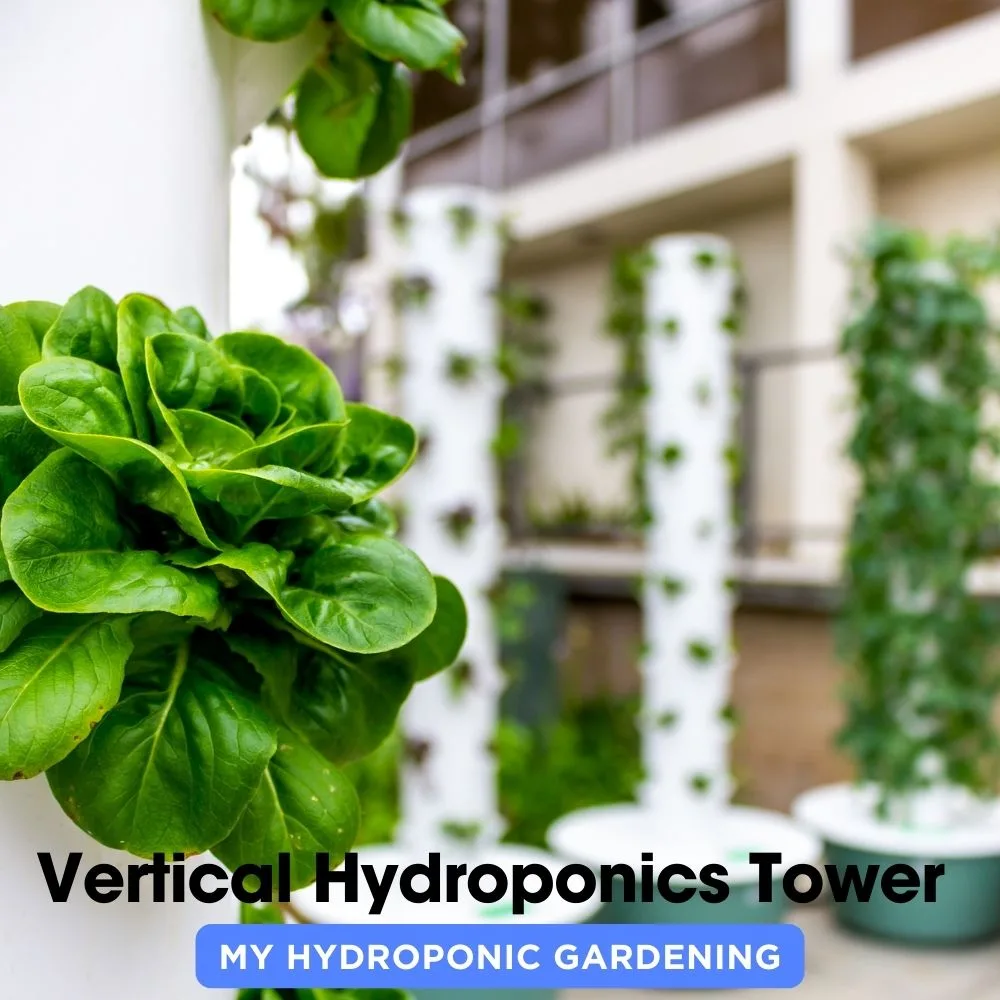
- Freestanding Towers: Self-contained units suitable for both indoor and outdoor use, these towers are popular for their ease of setup and maintenance.
- Aeroponic Towers: These systems mist plant roots with nutrient solution, promoting rapid growth and efficient nutrient uptake.
- Nutrient Film Technique (NFT) Systems: A thin film of nutrient-rich water constantly flows over the roots, ensuring optimal nutrient absorption.
- Zig-zag and Trellis Designs: These configurations maximize sunlight exposure and are often used in greenhouse settings.
Components of a Vertical Hydroponics Tower
A typical vertical hydroponics tower consists of several key components:
- Growing Containers and Net Pots: These hold the plants and growing medium.
- Irrigation System: Often utilizing PVC pipes, this system delivers water and nutrients to the plants.
- Nutrient Delivery System: Ensures plants receive the right balance of nutrients.
- Lighting System: For indoor setups, LED grow lights mimic sunlight and promote plant growth.
- Growing Medium: Options include rockwool, coconut coir, and other soilless substrates.
- Pumps and Water Circulation Systems: Move the nutrient solution throughout the tower.
- Structural Components: PVC pipes or other materials form the backbone of the system.
Crops Suitable for Vertical Hydroponics
A wide variety of crops thrive in vertical hydroponic systems:
- Leafy Greens: Lettuce, kale, spinach, and Swiss chard grow quickly and efficiently.
- Herbs: Basil, cilantro, mint, and chives are popular choices for their compact size and quick growth.
- Small Fruits and Vegetables: Tomatoes, peppers, and strawberries can be successfully cultivated with proper support.
- Microgreens: These nutrient-dense crops are well-suited to vertical systems and have a quick turnaround time.
- Edible Flowers: Add both beauty and flavor to culinary creations.
- Other Options: With proper planning, crops like cabbage, broccoli, eggplants, and cucumbers can also be adapted to vertical systems.
Applications and Benefits
Vertical hydroponics offers numerous applications and benefits:
- Urban Farming: Allows food production in densely populated areas with limited ground space.
- Year-round Growing: Indoor systems provide consistent growing conditions regardless of outdoor weather.
- Water Conservation: Hydroponic systems use up to 90% less water than traditional soil-based farming.
- Increased Yield: Vertical systems can produce significantly higher yields per square foot compared to traditional farming methods.
- Reduced Pest and Disease Issues: Controlled environments minimize the risk of pest infestations and plant diseases.
- Educational Tool: These systems are excellent for teaching about plant science, sustainability, and innovative agriculture techniques.
- Fresh, Local Produce: Restaurants and food service industries can grow fresh produce on-site, enhancing food quality and reducing transportation costs.
Challenges and Considerations
While vertical hydroponics offers many advantages, there are some challenges to consider:
- Initial Setup Costs: The equipment and technology required can be expensive, especially for larger systems.
- Technical Knowledge: Successful operation requires understanding of hydroponics, plant nutrition, and system maintenance.
- Energy Consumption: Indoor systems rely on artificial lighting and pumps, which can lead to high energy costs.
- Water and Nutrient Management: Maintaining the correct balance of nutrients and pH levels is crucial and can be challenging for beginners.
- Limited Crop Variety: While many plants thrive in these systems, some larger or deep-rooted crops may not be suitable.
- Light Distribution: Ensuring all plants receive adequate light can be challenging, especially in taller systems.
Getting Started with Vertical Hydroponics
For those interested in starting their own vertical hydroponic system, consider the following steps:
- Research and Planning: Understand the different types of systems and choose one that fits your space and needs.
- Start Small: Begin with a simple system to gain experience before scaling up.
- Choose Appropriate Crops: Start with easy-to-grow plants like lettuce or herbs.
- Invest in Quality Equipment: While it may be tempting to cut costs, reliable pumps, lights, and monitoring systems are crucial for success.
- Learn About Nutrient Management: Understanding plant nutrition is key to achieving healthy, productive crops.
- Monitor and Adjust: Regularly check your system’s pH, nutrient levels, and overall plant health, making adjustments as needed.
The Future of Vertical Hydroponics
As urban populations continue to grow and the demand for locally-sourced, sustainable food increases, vertical hydroponics is poised to play a significant role in the future of agriculture. Ongoing research and technological advancements are making these systems more efficient, accessible, and integrated with smart home technologies.
From rooftop gardens to indoor farming operations, vertical hydroponics offers a promising solution to many of the challenges facing modern agriculture. While it may not completely replace traditional farming methods, it provides a valuable complement, especially in urban areas where space is at a premium.
By understanding the principles, benefits, and challenges of vertical hydroponics, individuals and businesses can harness this innovative technology to contribute to a more sustainable and food-secure future. As we continue to navigate the complexities of feeding a growing global population, vertical hydroponics stands out as a beacon of innovation in the world of agriculture.
#1 Recommended Hydroponic Smart Kit | #2 Recommended Hydroponic Smart Kit |
| | |
Summary and FAQs
What are the main advantages of using a vertical hydroponics tower for growing plants?
The main advantages of vertical hydroponics towers include:
Potential for organic growing without pesticides
Space efficiency, allowing for high yields in small areas
Water conservation, using up to 90% less water than traditional soil-based farming
Year-round growing capability, especially for indoor systems
Reduced pest and disease issues due to the controlled environment
Increased crop yield per square foot compared to traditional methods
Flexibility for urban environments and small spaces
What types of plants grow best in vertical hydroponic systems?
Vertical hydroponic systems are well-suited for a variety of plants, including:
- Leafy greens like lettuce, kale, and spinach
- Herbs such as basil, cilantro, mint, and chives
- Small fruits and vegetables like cherry tomatoes, peppers, and strawberries
- Microgreens
- Edible flowers
- Some compact varieties of cabbage, broccoli, and cucumbers
Fast-growing, compact plants generally perform best in these systems.
What are the main components needed to set up a basic vertical hydroponics tower?
The main components for a basic vertical hydroponics tower include:
A timer for controlling the pump and lights
A large PVC pipe or similar structure for the main tower
Growing containers or net pots for individual plants
A reservoir (like a large bucket) to hold the nutrient solution
A submersible pump to circulate the nutrient solution
Tubing for water delivery
Growing medium (like rockwool or coconut coir)
Nutrient solution specifically formulated for hydroponics
LED grow lights for indoor setups
A timer for controlling the pump and lights
What are some common challenges faced when using vertical hydroponics towers, and how can they be addressed?
Common challenges and solutions include:
System complexity: Start with simpler systems and gradually increase complexity as you gain experience
Uneven water distribution: Ensure proper design and pump strength to reach all levels
Light distribution issues: Use vertical grow lights or carefully plan the tower’s orientation
Nutrient imbalances: Regularly monitor and adjust nutrient levels and pH
Root diseases: Maintain cleanliness and use beneficial bacteria in the nutrient solution
Energy costs: Opt for energy-efficient LED lights and pumps
System complexity: Start with simpler systems and gradually increase complexity as you gain experience
How does the cost of setting up and maintaining a vertical hydroponics tower compare to traditional gardening methods?
Initial setup costs for vertical hydroponics towers can be higher than traditional gardening due to the equipment required (pumps, lights, etc.). However, long-term maintenance costs can be lower due to:
- Reduced water usage
- No need for soil or frequent fertilizer applications
- Lower pest control expenses
- Higher yields in less space
- Year-round production capability
While the upfront investment may be higher, many users find that the long-term benefits and increased productivity offset the initial costs, especially in urban or space-limited environments. The exact cost comparison will depend on the scale of the system and the types of crops grown.