Harvesting and Post-Harvest Handling for Hydroponic | Best Hydroponics
Hydroponic harvesting and post-harvest handling present unique challenges and opportunities compared to traditional agriculture. The controlled environment allows for precise management of growing conditions but requires careful consideration during harvest to prevent cross-contamination from nutrient-rich water. Key aspects include pre-harvest considerations like system design and nutrient management, harvesting techniques that balance efficiency and safety, strict worker hygiene practices, and rigorous sanitation protocols.
Post-harvest handling focuses on maintaining produce quality through proper cooling, packaging, and transportation methods. Water management is critical, with distinct requirements for production and post-harvest water. The Food Safety Modernization Act’s Produce Safety Rule sets important standards for hydroponic operations. While challenges exist, such as high initial costs and energy requirements, technological advancements in automation and traceability promise to address many issues. Overall, proper harvesting and post-harvest practices are essential for hydroponic growers to deliver fresh, safe, and high-quality produce year-round.
#1 Recommended Hydroponic Smart Kit | #2 Recommended Hydroponic Smart Kit |
 |  |
Harvesting and Post-Harvest Handling of Hydroponic Crops: Ensuring Quality and Safety
Hydroponic farming has revolutionized agriculture, offering a soil-less alternative that promises higher yields, year-round production, and reduced environmental impact. As this innovative method gains traction, understanding the intricacies of harvesting and post-harvest handling becomes crucial for growers aiming to deliver high-quality, safe produce to consumers.
The Unique Landscape of Hydroponic Harvesting
Hydroponic systems present distinct challenges and opportunities compared to traditional soil-based agriculture. The controlled environment allows for precise nutrient management and optimal growing conditions, but it also requires careful consideration during harvest to maintain these advantages. Unlike field crops, hydroponic produce often grows in close proximity to nutrient-rich water, necessitating stringent measures to prevent cross-contamination.
The Food Safety Modernization Act’s Produce Safety Rule (FSMA PSR) has significant implications for hydroponic growers. While the rule doesn’t mandate specific practices for hydroponics, it sets standards for produce safety that apply to many hydroponic operations. Growers must be vigilant in implementing food safety practices throughout the harvesting and post-harvest processes.
Pre-Harvest Considerations: Setting the Stage for Success
Successful hydroponic harvesting begins long before the first crop is picked. System design plays a crucial role in facilitating efficient harvesting. Growers should consider ergonomics, accessibility, and the potential for automation when setting up their systems. For instance, vertical hydroponic systems may require specialized harvesting equipment or techniques to ensure worker safety and efficiency.
Nutrient solution management is another critical pre-harvest consideration. As harvest approaches, growers often adjust nutrient concentrations to influence crop characteristics. For leafy greens, reducing nitrogen levels can enhance flavor and texture, while for fruiting crops, adjusting potassium levels can improve fruit quality. However, these practices require careful balance to avoid compromising yield or nutritional value.
Timing is everything in hydroponic harvesting. Unlike field crops, which often have a single harvest period, many hydroponic crops can be harvested continuously. Growers must develop a keen understanding of crop maturity indicators and market demands to optimize harvest timing. For instance, harvesting leafy greens too late can result in bitter flavors, while premature harvesting of tomatoes can affect taste and shelf life.
Harvesting Techniques: Balancing Efficiency and Safety
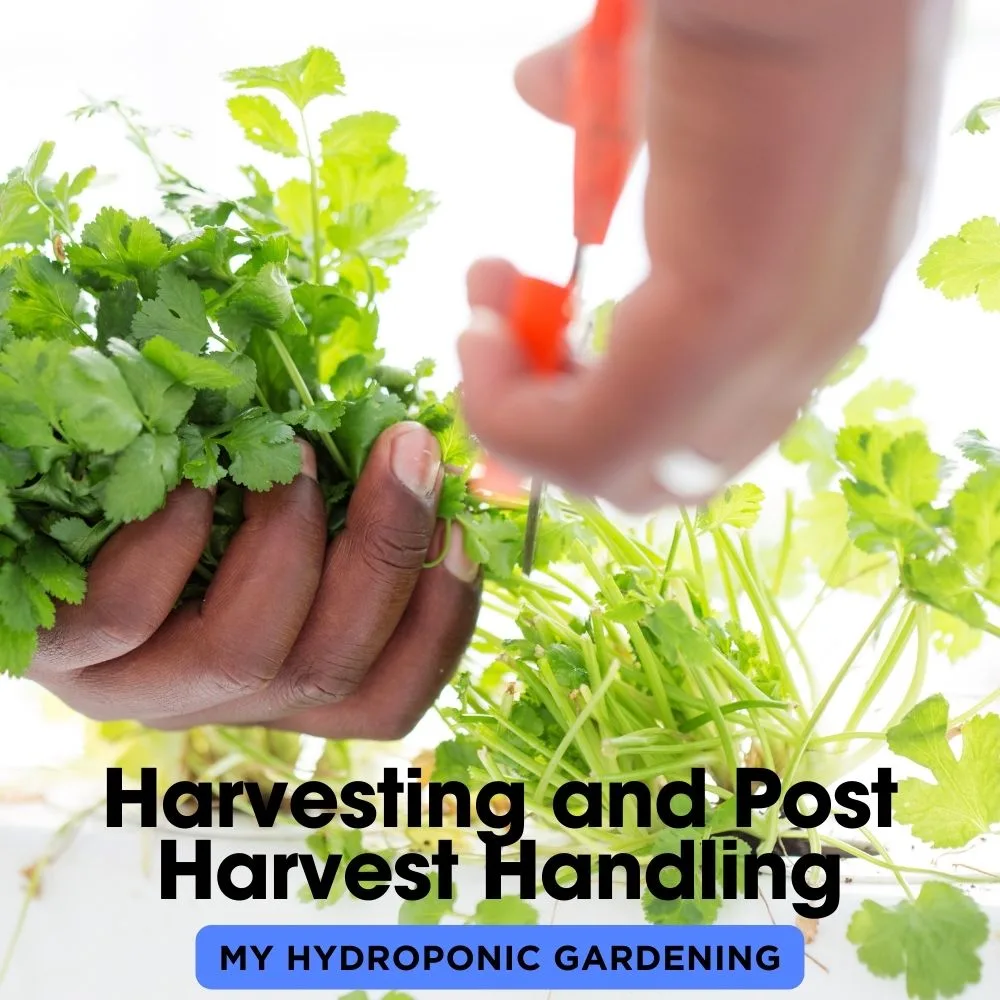
Hydroponic harvesting techniques range from manual methods to advanced automated systems. For smaller operations, hand harvesting remains common, particularly for delicate crops like herbs and leafy greens. Larger commercial operations increasingly employ automated harvesting systems, which can significantly increase efficiency and reduce labor costs.
Regardless of the method, preventing cross-contamination during harvest is paramount. The proximity of crops to nutrient solution in hydroponic systems poses a unique challenge. Growers must implement practices to minimize contact between harvested produce and production water. This may involve careful lifting techniques for floating raft systems or specialized cutting tools for vertical systems.
Worker Health and Hygiene: The First Line of Defense
In hydroponic operations, worker health and hygiene are critical components of food safety. Proper handwashing facilities must be readily available, and workers should be trained in correct handwashing techniques. The use of gloves, while common, requires careful management to prevent them from becoming sources of contamination.
Comprehensive training programs for workers are essential. These should cover not only proper harvesting techniques but also the principles of food safety and the specific risks associated with hydroponic systems. Regular refresher courses and updates on new regulations or best practices should be part of ongoing worker education.
Sanitation and Quality Control: Maintaining the Hydroponic Advantage
The controlled environment of hydroponic systems offers a significant advantage in terms of sanitation, but it also requires vigilant quality control measures. Equipment used in harvesting, such as scissors or knives, must be regularly sanitized to prevent the spread of pathogens. Some operations use UV sterilization or chemical sanitizers to maintain tool cleanliness throughout the harvest process.
Quality assessment criteria for hydroponic produce often focus on visual appearance, texture, and flavor. However, growers should also consider implementing microbial testing protocols, particularly for high-risk crops like leafy greens. While hydroponic systems generally have lower microbial contamination risks compared to soil-based agriculture, the potential for waterborne pathogens necessitates ongoing vigilance.
Post-Harvest Handling: Preserving Quality from Farm to Table
Post-harvest handling procedures can significantly impact the quality and safety of hydroponic produce. Immediate cooling after harvest is crucial for many crops to maintain freshness and extend shelf life. Hydrocooling, forced-air cooling, or vacuum cooling may be employed depending on the crop type and scale of operation.
Packaging plays a dual role in post-harvest handling, protecting the produce during transportation and potentially extending shelf life. Modified atmosphere packaging (MAP) is increasingly used for hydroponic produce, particularly for leafy greens and herbs. MAP can slow respiration rates and reduce ethylene sensitivity, but it requires careful management to avoid creating anaerobic conditions that could promote pathogen growth.
Water Management: A Critical Control Point
Water management is a critical aspect of hydroponic harvesting and post-harvest handling. The distinction between production water (used for growing) and postharvest water (used for washing or cooling) is crucial. While production water may contain nutrients and non-pathogenic microorganisms beneficial for plant growth, postharvest water must meet stringent quality standards to prevent contamination.
The FSMA PSR requires that water used for postharvest activities have no detectable generic E. coli. This often necessitates the use of sanitizers in wash water or hydrocooling systems. Chlorine-based sanitizers are common, but alternatives like peroxyacetic acid are gaining popularity due to their efficacy and reduced environmental impact.
Challenges and Future Directions
Despite its many advantages, hydroponic harvesting and post-harvest handling face several challenges. The initial investment in hydroponic systems and specialized harvesting equipment can be substantial, potentially limiting adoption by smaller growers. Additionally, the energy requirements for climate control and lighting in indoor hydroponic facilities can contribute to a higher carbon footprint compared to some traditional farming methods.
Looking ahead, technological advancements promise to address many of these challenges. Robotics and artificial intelligence are being developed to automate harvesting processes further, potentially reducing labor costs and improving consistency. Blockchain technology is being explored to enhance traceability in the hydroponic supply chain, offering consumers greater transparency about their produce’s journey from farm to table.
Conclusion
Hydroponic harvesting and post-harvest handling represent a critical juncture where the benefits of controlled-environment agriculture meet the realities of food safety and market demands. By implementing best practices in harvesting techniques, worker hygiene, sanitation, and water management, hydroponic growers can deliver fresh, safe, and high-quality produce to consumers year-round. As technology continues to evolve and regulations adapt to this growing sector, the future of hydroponic agriculture looks bright, promising sustainable and efficient food production for a growing global population.
#1 Recommended Hydroponic Smart Kit | #2 Recommended Hydroponic Smart Kit |
| | |
Summary and FAQs
How does harvesting hydroponic crops differ from traditional soil-grown crops?
Harvesting hydroponic crops differs in several ways:
- Proximity to nutrient-rich water requires extra care to prevent contamination.
- Continuous harvesting is often possible, rather than a single harvest season.
- The controlled environment allows for more precise timing of harvest for optimal quality.
- Specialized equipment may be needed, especially for vertical systems.
- There’s generally less concern about soil contamination, but more focus on water management.
What are the key food safety considerations during hydroponic harvesting?
Key food safety considerations include:
- Preventing cross-contamination between production water and harvested produce.
- Maintaining strict worker hygiene practices, including proper handwashing and glove use.
- Regular sanitization of harvesting tools and equipment.
- Ensuring that any post-harvest water used meets the FSMA PSR standard of no detectable generic E. coli.
- Implementing traceability systems to track produce from harvest to distribution.
How can hydroponic growers extend the shelf life of their produce post-harvest?
Hydroponic growers can extend shelf life by:
- Implementing immediate cooling after harvest (e.g., hydrocooling, forced-air cooling).
- Using modified atmosphere packaging (MAP) for appropriate crops.
- Maintaining a consistent cold chain throughout storage and transportation.
- Harvesting at optimal maturity to ensure the best initial quality.
- Managing ethylene exposure for sensitive crops.
- Minimizing physical damage during harvest and handling.
What are the advantages and challenges of automating the hydroponic harvesting process?
Advantages of automation include:
- Increased efficiency and consistency in harvesting.
- Reduced labor costs and potential for human error.
- Ability to harvest 24/7 in large operations.
Challenges include:
- High initial investment costs for automated systems.
- Potential difficulty in adapting automation to different crop types or system designs.
- Need for specialized maintenance and technical skills.
- Possible limitation in handling delicate crops that may still require human touch.
How does water management in hydroponic systems impact food safety during and after harvest?
- Water management is crucial for food safety in hydroponic systems:
- Production water and post-harvest water must be managed separately to prevent cross-contamination.
- Post-harvest water must meet stringent quality standards (no detectable E. coli) as per FSMA PSR.
- Sanitizers are often necessary in post-harvest water to maintain safety.
- Regular water testing and monitoring are essential to ensure ongoing safety.
- Proper drainage and water flow design in the growing system can help prevent water splashing onto harvested produce.
- Understanding and managing biofilms in the hydroponic system is important to prevent the harboring of pathogens that could contaminate produce during harvest.
These questions address key aspects of hydroponic harvesting and post-harvest handling, focusing on the unique challenges and considerations in hydroponic systems compared to traditional agriculture.