Optimizing Nutrient Concentrations for Different Hydroponic Crops | Best Hydroponics
Optimizing nutrient concentrations is crucial for successful hydroponic crop production. This process involves tailoring nutrient solutions to specific crops and their growth stages, considering factors such as pH, electrical conductivity, and nutrient interactions. Advanced technologies like real-time monitoring systems and AI-driven predictive algorithms are revolutionizing nutrient management, enabling more precise and efficient cultivation. However, challenges persist, including environmental concerns about nutrient runoff, the complexity of organic hydroponics, and the need for micronutrient optimization.
Crop-specific strategies, such as adjusting potassium levels for tomatoes or managing nitrogen for leafy greens, are essential for maximizing yield and quality. As hydroponics continues to evolve, future directions include developing integrated management systems, exploring biofortification, and adapting to climate change. While initial costs and technical expertise requirements can be barriers, optimized hydroponic systems have the potential to play a significant role in addressing global food security challenges.
#1 Recommended Hydroponic Smart Kit | #2 Recommended Hydroponic Smart Kit |
 |  |
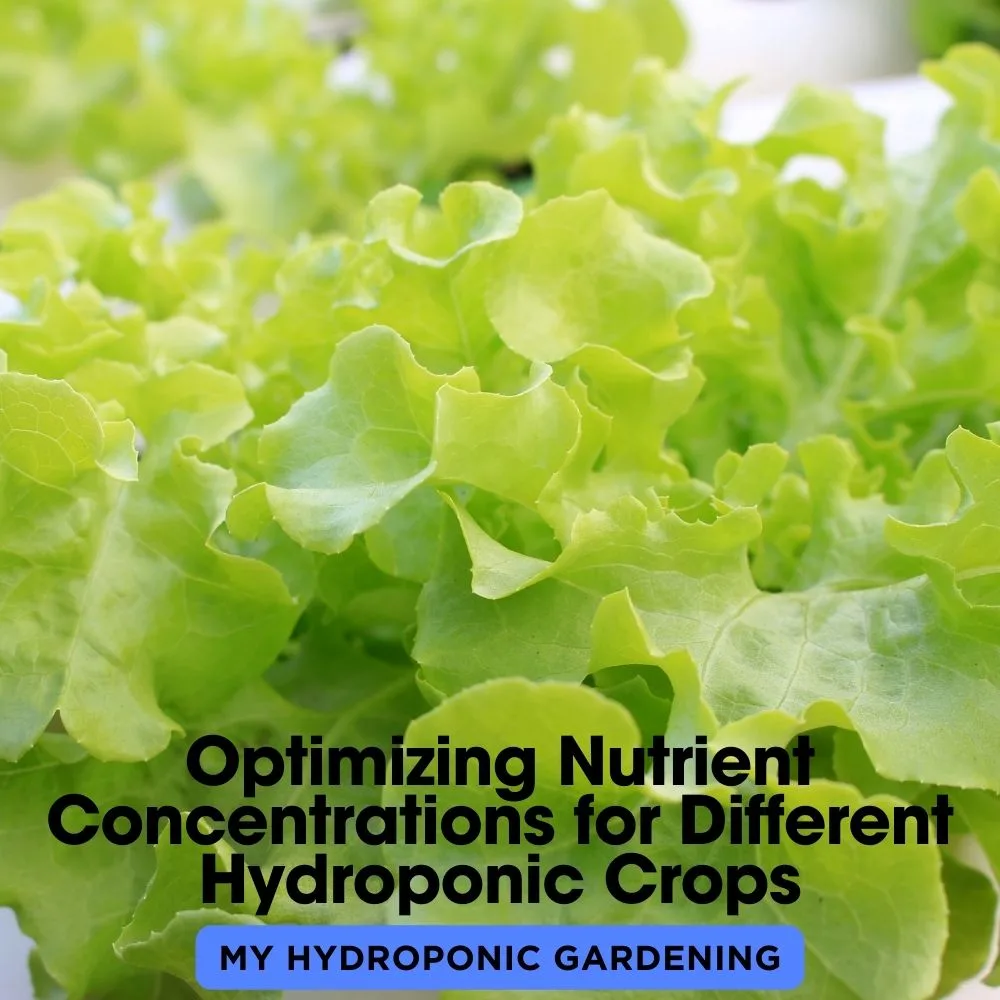
Optimizing Nutrient Concentrations for Different Hydroponic Crops: A Comprehensive Guide
Hydroponics, a method of growing plants without soil, has gained significant traction in recent years due to its potential for high yields, water efficiency, and year-round production. At the heart of successful hydroponic cultivation lies the precise management of nutrient solutions. This article delves into the intricacies of optimizing nutrient concentrations for various hydroponic crops, with a focus on recent developments and potential challenges.
The Foundation of Hydroponic Nutrition
Hydroponic nutrient solutions provide plants with all essential elements for growth. These include macronutrients (nitrogen, phosphorus, potassium, calcium, magnesium, and sulfur) and micronutrients (iron, manganese, boron, zinc, copper, and molybdenum). Unlike in soil-based agriculture, hydroponic systems require careful formulation and management of these nutrients to ensure optimal plant growth.
Recent research has highlighted the importance of understanding nutrient interactions. For instance, high levels of potassium can inhibit calcium uptake, potentially leading to disorders like blossom end rot in tomatoes. Similarly, an excess of phosphorus can limit the availability of zinc and iron. Growers must balance these interactions to prevent deficiencies or toxicities.
Tailoring Nutrients to Crop Stages
One of the most critical aspects of hydroponic nutrient management is adjusting concentrations according to plant growth stages. For example, tomatoes require different nutrient profiles during their vegetative, flowering, and fruiting stages. Recent studies have shown that increasing potassium levels during fruit development can enhance fruit quality and shelf life.
Leafy greens, on the other hand, often benefit from higher nitrogen levels throughout their growth cycle to promote rapid leaf development. However, excessive nitrogen can lead to nitrate accumulation, which is a health concern for consumers. Balancing nutrient levels to maximize growth while maintaining food safety is an ongoing challenge for hydroponic growers.
Advanced Monitoring and Control Systems
The advent of precision agriculture technologies has revolutionized nutrient management in hydroponics. Real-time monitoring systems can now track pH, electrical conductivity (EC), and even specific ion concentrations in nutrient solutions. This allows for immediate adjustments to maintain optimal growing conditions.
Artificial intelligence and machine learning algorithms are being developed to predict plant nutrient needs based on environmental factors and growth patterns. These systems can potentially automate nutrient adjustments, reducing labor costs and improving consistency. However, the high initial investment and the need for technical expertise can be barriers to adoption for smaller growers.
Environmental and Economic Considerations
While hydroponics offers significant water savings compared to traditional agriculture, concerns about nutrient runoff persist. Closed-loop systems that recycle nutrient solutions are becoming more common, reducing environmental impact and conserving resources. However, these systems require careful management to prevent the buildup of harmful compounds or imbalances over time.
From an economic perspective, optimizing nutrient use can significantly reduce input costs and improve crop yields. However, the initial setup costs for a well-managed hydroponic system can be substantial. Growers must weigh these factors against potential returns when considering hydroponic production.
Crop-Specific Nutrient Optimization
Different crops have unique nutritional requirements that must be addressed in hydroponic systems. For instance:
- Tomatoes: Recent research has shown that manipulating the potassium to nitrogen ratio can influence fruit quality. Higher potassium levels during fruiting can improve taste and shelf life.
- Lettuce and Leafy Greens: These crops often benefit from higher nitrogen levels but are sensitive to nutrient imbalances. Maintaining proper calcium levels is crucial to prevent tipburn, a common physiological disorder.
- Strawberries: Studies have demonstrated that adjusting the EC of nutrient solutions can influence fruit quality. Higher EC levels during fruit development can increase sugar content but may reduce overall yield.
- Herbs: Many herbs prefer lower nutrient concentrations compared to fruiting crops. Overfeeding can lead to reduced essential oil production, affecting flavor and aroma.
Challenges and Future Directions
Despite the advancements in hydroponic nutrient management, several challenges remain:
- Organic Hydroponics: There’s growing interest in organic hydroponic production, but formulating organic nutrient solutions that meet plant needs while maintaining system stability is complex.
- Micronutrient Management: While macronutrient management is well understood, optimizing micronutrient levels for different crops and growth stages remains challenging.
- Climate Change Adaptation: As global temperatures rise, nutrient uptake and plant metabolism may be affected, requiring adjustments to traditional nutrient formulations.
- Biofortification: There’s potential to enhance the nutritional value of hydroponic crops through careful nutrient management, but more research is needed to optimize this process.
Conclusion
Optimizing nutrient concentrations in hydroponic systems is a complex but crucial aspect of modern agriculture. As technology advances and our understanding of plant physiology deepens, we can expect more precise and efficient nutrient management strategies. However, growers must remain vigilant about the potential downsides, including high initial costs, technical complexity, and the need for constant monitoring.
The future of hydroponic nutrient management likely lies in integrated systems that combine real-time monitoring, predictive algorithms, and automated adjustments. As global food production faces increasing challenges from climate change and resource scarcity, optimized hydroponic systems may play a crucial role in ensuring food security and quality. However, continued research and development are necessary to address current limitations and unlock the full potential of hydroponic cultivation.
#1 Recommended Hydroponic Smart Kit | #2 Recommended Hydroponic Smart Kit |
| | |
Summary and FAQs
How do nutrient requirements differ between various hydroponic crops?
Nutrient requirements vary significantly among different hydroponic crops. For example, tomatoes need higher potassium levels during fruiting stages to improve fruit quality and shelf life. Leafy greens often require higher nitrogen levels throughout their growth cycle for rapid leaf development. Herbs generally prefer lower overall nutrient concentrations compared to fruiting crops. Strawberries benefit from adjusted EC levels during fruit development to influence sugar content. It’s crucial to tailor nutrient solutions to the specific needs of each crop and its growth stage for optimal results.
What are the key factors to consider when managing pH and EC in hydroponic systems?
The two critical factors in hydroponic nutrient management are pH and Electrical Conductivity (EC). The optimal pH range for most hydroponic crops is between 5.5 and 6.5, which ensures maximum nutrient availability. EC levels typically range from 1.5 to 3.5 mS/cm, varying by crop and growth stage. Regular monitoring and adjustment of pH are necessary, as plant growth can cause pH drift over time. Managing rootzone pH, which may differ from the pH of the nutrient solution being delivered, is crucial for optimal nutrient uptake. Growers should also be aware that adjusting EC can influence crop quality and yield.
How can technology assist in optimizing nutrient concentrations for hydroponic crops?
Recent technological advancements have significantly improved nutrient management in hydroponics. Real-time monitoring systems can track pH, EC, and specific ion concentrations in nutrient solutions, allowing for immediate adjustments. Artificial intelligence and machine learning algorithms are being developed to predict plant nutrient needs based on environmental factors and growth patterns, potentially automating nutrient adjustments. These technologies can reduce labor costs, improve consistency, and optimize nutrient use. However, the high initial investment and need for technical expertise can be challenging for smaller growers.
What are the environmental concerns associated with hydroponic nutrient management, and how can they be addressed?
The main environmental concern with hydroponic systems is nutrient runoff, which can contribute to water pollution. To address this, many growers are implementing closed-loop systems that recycle nutrient solutions, reducing environmental impact and conserving resources. However, these systems require careful management to prevent the buildup of harmful compounds or imbalances over time. Additionally, sustainable nutrient sourcing, including the use of recycled or locally-produced fertilizers, is gaining importance. Growers must also navigate various regulations regarding nutrient use and discharge, which can vary by region.
What are the current challenges and future directions in optimizing nutrient concentrations for hydroponic crops?
Several challenges persist in hydroponic nutrient management:
- Developing stable and effective organic nutrient solutions for organic hydroponics
- Optimizing micronutrient levels for different crops and growth stages
- Adapting nutrient formulations to changing climate conditions
- Exploring the potential for biofortification through nutrient management
Future directions include the development of integrated systems combining real-time monitoring, predictive algorithms, and automated adjustments. There’s also ongoing research into the interplay between CO2 enrichment and nutrient uptake, which could lead to more efficient nutrient use. As global food production faces increasing challenges, optimized hydroponic systems may play a crucial role in ensuring food security and quality, but continued research is necessary to address current limitations and unlock the full potential of hydroponic cultivation.