Monitoring and Adjusting EC Levels in Hydroponic Systems | Best Hydroponics
Monitoring and adjusting Electrical Conductivity (EC) levels is crucial for successful hydroponic cultivation. EC directly indicates nutrient concentration in the solution, affecting plant growth, nutrient uptake, and overall system efficiency. Modern EC management employs advanced technologies like continuous monitoring systems, wireless sensors, and AI-driven predictive models. Proper EC control prevents nutrient toxicity and deficiencies, regulates water uptake, optimizes yield, and promotes environmental sustainability.
Adjusting EC involves adding nutrients or diluting the solution, with gradual changes preferred to avoid plant stress. EC interacts with other parameters like pH, temperature, and dissolved oxygen, necessitating a holistic approach to hydroponic management. While advanced systems offer precise control, challenges include sensor maintenance, water quality variations, and crop-specific requirements. Future trends in EC management include greater integration with climate control systems, nanosensors for localized monitoring, and more user-friendly interfaces. Effective EC management remains fundamental to maximizing the potential of hydroponic systems.
#1 Recommended Hydroponic Smart Kit | #2 Recommended Hydroponic Smart Kit |
 |  |
Monitoring and Adjusting EC Levels in Hydroponic Systems
Electrical Conductivity (EC) is a critical parameter in hydroponic systems, directly influencing plant growth, nutrient uptake, and overall system efficiency. As hydroponic cultivation continues to gain popularity in both commercial and hobby settings, understanding and managing EC levels has become increasingly important. This article explores the latest developments in EC monitoring and adjustment techniques, highlighting their significance in modern hydroponic farming.
Understanding EC in Hydroponics
EC in hydroponics refers to the solution’s ability to conduct electricity, which correlates with the concentration of dissolved salts and nutrients. Measured in millisiemens per centimeter (mS/cm) or microsiemens per centimeter (μS/cm), EC provides growers with a quantifiable measure of nutrient availability to plants.
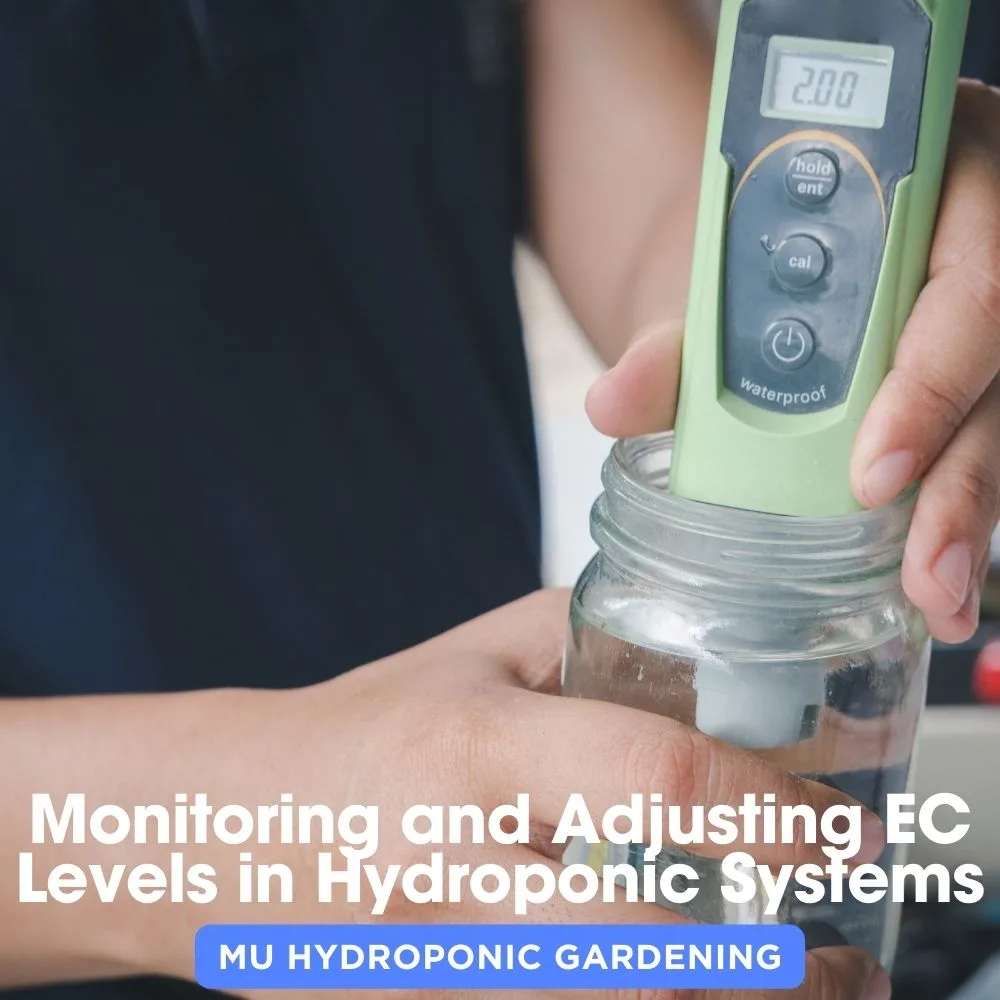
Recent advancements in EC measurement technology have improved accuracy and reliability. Modern EC meters now often include temperature compensation features, ensuring more precise readings across varying environmental conditions. Some cutting-edge systems even incorporate machine learning algorithms to predict EC fluctuations based on historical data and growth patterns.
The Importance of EC Monitoring
Proper EC monitoring is crucial for several reasons:
- Nutrient Management: EC levels directly indicate nutrient concentration, allowing growers to maintain optimal feeding regimes.
- Preventing Toxicity and Deficiencies: Keeping EC within appropriate ranges helps avoid nutrient burn from excess concentrations and deficiencies from insufficient nutrients.
- Water Uptake Regulation: EC levels affect osmotic pressure, influencing plants’ ability to absorb water. High EC can lead to dehydration even in water-rich environments.
- Yield Optimization: Maintaining ideal EC levels throughout the growth cycle can significantly improve crop yields and quality.
- Environmental Sustainability: Precise EC control reduces nutrient waste and minimizes the environmental impact of hydroponic operations.
Modern Monitoring Techniques
Today’s hydroponic systems employ a range of EC monitoring techniques:
- Continuous Monitoring Systems: Advanced setups use inline EC sensors that provide real-time, continuous data. These systems often integrate with climate control and nutrient dosing equipment for automated adjustments.
- Wireless Sensors: IoT-enabled EC sensors allow remote monitoring via smartphones or computers, enabling growers to track EC levels from anywhere.
- Multi-Parameter Probes: Some modern devices measure EC alongside other crucial parameters like pH and temperature, providing a comprehensive view of the nutrient solution’s status.
- Artificial Intelligence Integration: AI-driven systems can analyze EC trends over time, predicting future fluctuations and suggesting preemptive adjustments.
Adjusting EC Levels
Proper EC adjustment is a critical skill in hydroponic management. Methods for adjusting EC include:
- Adding Concentrated Nutrient Solution: To increase EC, growers can add pre-mixed nutrient concentrates or individual nutrients.
- Dilution: Decreasing EC typically involves adding water to dilute the solution or replacing it entirely.
- Automated Dosing Systems: Advanced systems use peristaltic pumps and controllers to automatically adjust EC levels based on sensor readings.
- Reverse Osmosis Systems: For precise control, especially in areas with high-EC water sources, reverse osmosis systems can be used to create a “blank slate” for nutrient solutions.
It’s important to note that sudden, large changes in EC can stress plants. Gradual adjustments are generally preferred, especially for sensitive crops.
EC and Other Hydroponic Parameters
EC management doesn’t exist in isolation. It interacts with various other hydroponic parameters:
- pH Levels: EC and pH are closely related, as pH affects nutrient availability and can change as plants uptake nutrients.
- Temperature: Solution temperature influences EC readings and nutrient solubility.
- Dissolved Oxygen: Adequate oxygen levels are crucial for nutrient uptake and overall root health.
- Light Intensity: Higher light levels can increase transpiration rates, potentially requiring EC adjustments.
Understanding these interactions is crucial for maintaining a balanced hydroponic environment.
Challenges and Considerations
While EC monitoring and adjustment are essential, there are some challenges to consider:
- Sensor Maintenance: EC probes require regular cleaning and calibration to maintain accuracy.
- Water Quality Variations: The base EC of the water source can fluctuate, especially in regions with variable water quality.
- Crop-Specific Requirements: Different plant species and even different growth stages may require varying EC levels, necessitating a flexible approach.
- Overreliance on Technology: While automated systems are beneficial, overreliance can lead to complacency. Growers should maintain the skills to manually monitor and adjust EC when necessary.
- Cost Considerations: Advanced EC monitoring and control systems can be expensive, potentially limiting their adoption in smaller operations.
Future Trends in EC Management
The future of EC management in hydroponics looks promising, with several emerging trends:
- AI and Machine Learning: Predictive models are becoming more sophisticated, allowing for proactive EC management based on plant growth patterns and environmental factors.
- Integration with Climate Control: Holistic systems that manage EC alongside temperature, humidity, and CO2 levels are becoming more common.
- Nanosensors: Miniaturized sensors could allow for more precise, localized EC monitoring within the root zone.
- Sustainable Practices: There’s a growing focus on recycling and treating nutrient solutions to minimize waste and environmental impact.
- User-Friendly Interfaces: As technology advances, there’s a push towards more intuitive, user-friendly EC management systems accessible to growers of all experience levels.
Conclusion
Effective monitoring and adjustment of EC levels are fundamental to successful hydroponic cultivation. With advancements in technology, growers now have access to more precise, automated, and integrated EC management tools than ever before. However, it’s crucial to remember that these tools are aids, not replacements for horticultural knowledge and experience.
While the benefits of proper EC management are clear – improved plant health, optimized yields, and reduced environmental impact – growers must also be aware of the challenges, including the need for regular maintenance, the complexity of interacting parameters, and the potential costs of advanced systems.
As hydroponic farming continues to evolve, EC management will likely become even more sophisticated, integrating with other aspects of controlled environment agriculture. For growers, staying informed about these advancements and understanding the principles behind EC management will be key to maximizing the potential of their hydroponic systems.
#1 Recommended Hydroponic Smart Kit | #2 Recommended Hydroponic Smart Kit |
| | |
Summary and FAQs
What is the ideal EC range for hydroponic systems?
The ideal EC range varies depending on the crop type, growth stage, and environmental conditions. Generally, most hydroponic crops thrive in EC ranges between 1.2 to 2.4 mS/cm. However, seedlings typically require lower EC levels (0.8-1.2 mS/cm), while fruiting plants may need higher levels (up to 3.5 mS/cm). It’s crucial to research the specific requirements of your crop and adjust accordingly. Always start with lower EC levels and gradually increase as plants mature.
How often should I measure EC levels in my hydroponic system?
The frequency of EC measurements depends on your system size, crop type, and growth stage. For small hobby systems, daily checks are often sufficient. Larger commercial operations typically use continuous monitoring systems. During critical growth stages or when introducing new nutrients, more frequent measurements (2-3 times daily) may be necessary. As a general rule, consistency in monitoring is key to maintaining optimal nutrient levels and preventing issues before they affect plant health.
What are the signs of EC levels being too high or too low in a hydroponic system?
Recent technological advancements have significantly improved nutrient management in hydroponics. Real-time monitoring systems can track pH, EC, and specific ion concentrations in nutrient solutions, allowing for immediate adjustments. Artificial intelligence and machine learning algorithms are being developed to predict plant nutrient needs based on environmental factors and growth patterns, potentially automating nutrient adjustments. These technologies can reduce labor costs, improve consistency, and optimize nutrient use. However, the high initial investment and need for technical expertise can be challenging for smaller growers.
How do I adjust EC levels if they’re too high or too low?
To lower EC levels:
- Dilute the nutrient solution by adding water
- Partially or fully replace the nutrient solution
- Use a less concentrated nutrient mix
To raise EC levels:
- Add a concentrated nutrient solution
- Add individual nutrients based on plant needs
- Use a more concentrated nutrient mix
Always make adjustments gradually to avoid shocking the plants. For precise control, consider using an automated dosing system.
How does water temperature affect EC readings, and should I be concerned about this?
Water temperature can significantly affect EC readings. Generally, as water temperature increases, EC readings also increase, even if the actual concentration of dissolved solids remains the same. This is because warmer water allows for greater ion mobility, leading to higher conductivity.
Most modern EC meters include temperature compensation features to account for this effect. However, it’s still important to be aware of this relationship, especially if you’re using older equipment or if your hydroponic system experiences significant temperature fluctuations.
For the most accurate readings, try to maintain a consistent water temperature in your system, ideally between 20-25°C (68-77°F). If you’re taking manual readings, allow your EC meter to stabilize in the solution for a minute before recording the measurement. Always calibrate your EC meter regularly and follow the manufacturer’s guidelines for temperature compensation settings.