Comparing LED Grow Lights For Hydroponic | Best Hydroponics
LED grow lights have revolutionized hydroponic gardening, offering superior energy efficiency, customizable spectrums, and longevity compared to traditional lighting methods. When choosing LED grow lights, factors such as spectrum coverage, PAR output, energy consumption, heat management, and durability are crucial. Full-spectrum white LEDs mimic natural sunlight, while red and blue dual-band LEDs focus on primary photosynthesis wavelengths. LEDs outperform HPS, fluorescent, and metal halide lights in most aspects, though they have a higher upfront cost.
Key considerations include understanding plant light requirements, measured by PAR, PPFD, and DLI. While LED grow lights offer numerous advantages, they also have drawbacks such as complexity and potential for light burn. Despite these challenges, LEDs represent the cutting edge in hydroponic lighting, providing growers with unprecedented control over their plants’ light environment. As technology advances, LED grow lights are expected to become even more efficient and customizable, further improving indoor growing experiences.
#1 Recommended Hydroponic Smart Kit | #2 Recommended Hydroponic Smart Kit |
 |  |
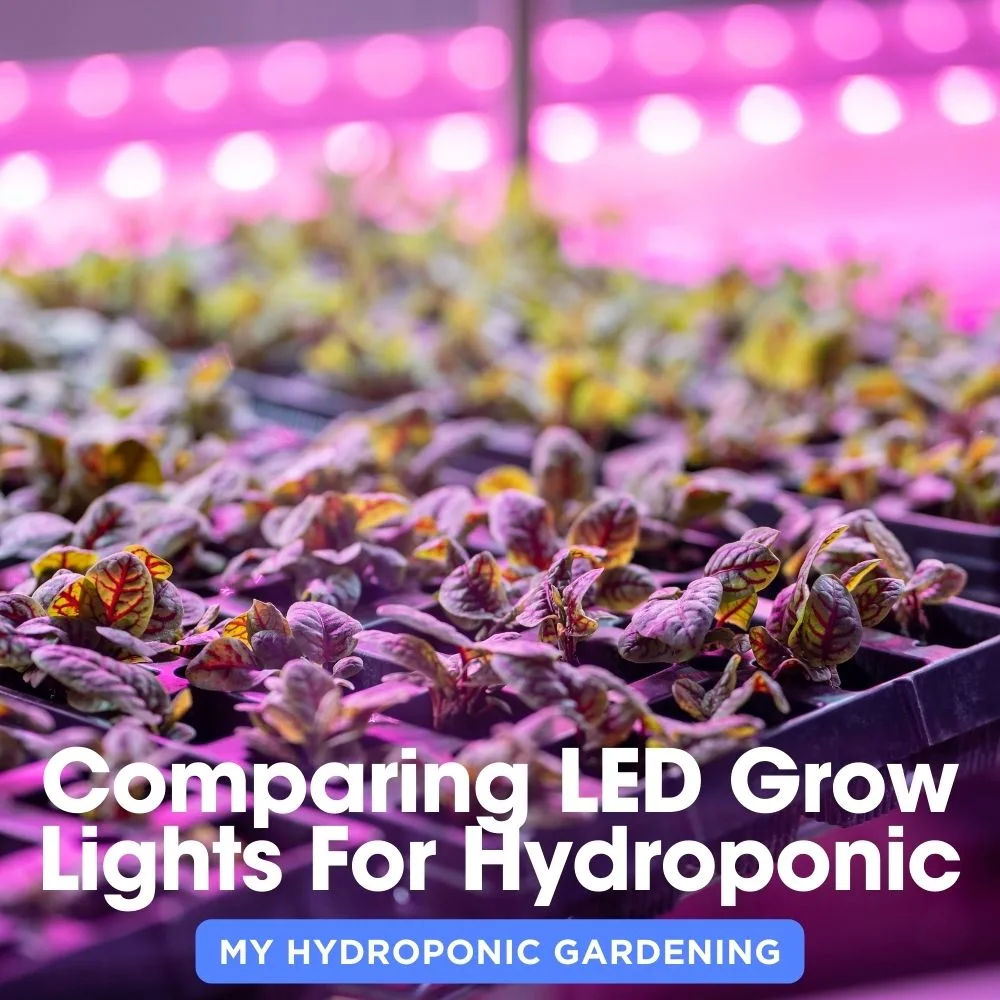
Comparing LED Grow Lights for Hydroponics: A Comprehensive Guide
In the world of hydroponic gardening, lighting plays a crucial role in plant growth and development. As technology advances, LED grow lights have emerged as a game-changer, offering numerous benefits over traditional lighting methods. This article will explore the various aspects of LED grow lights for hydroponic systems, comparing them to other technologies and highlighting key factors to consider when choosing the right lighting solution for your indoor garden.
The Evolution of Grow Lights
The journey of grow lights began with incandescent bulbs, progressed to fluorescent tubes, and then to high-intensity discharge (HID) lamps like metal halide and high-pressure sodium. Today, LED technology represents the pinnacle of artificial lighting for plants, providing unprecedented The Evolution of Grow Lights over light spectrum and intensity.
Understanding Light and Plant Growth
To appreciate the advantages of LED grow lights, it’s essential to understand how light affects plant growth. Photosynthesis, the process by which plants convert light energy into chemical energy, primarily utilizes red (620-750 nm) and blue (450-495 nm) light wavelengths. Red light promotes flowering and fruit production, while blue light encourages leaf growth and compact plant structure.
Key measurements in plant lighting include:
- Photosynthetically Active Radiation (PAR): The range of light wavelengths used in photosynthesis.
- Photosynthetic Photon Flux Density (PPFD): The amount of PAR that actually reaches the plant.
- Daily Light Integral (DLI): The total amount of PAR received by a plant over a 24-hour period.
LED Grow Light Fundamentals
LED grow lights use light-emitting diodes to produce specific wavelengths of light beneficial for plant growth. They come in two main types:
- Full spectrum white: Mimics natural sunlight and provides a balanced light output.
- Red and blue (dual-band): Focuses on primary wavelengths used in photosynthesis but produces a purplish light.
LED grow lights utilize various LED types, including Chip-on-Board (COB) and Surface Mounted Diode (SMD), each offering different advantages in terms of efficiency, heat management, and light distribution.
Comparing LED Grow Lights to Other Technologies
When compared to other lighting technologies, LEDs offer several advantages:
- vs. HPS (High-Pressure Sodium): LEDs are more energy-efficient, have a longer lifespan, produce less heat, and offer better spectrum control. However, HPS lights still have advantages in deep canopy penetration and lower initial costs.
- vs. Fluorescent: LEDs outperform fluorescent lights in energy efficiency, lifespan, spectrum control, and light intensity. Fluorescent lights remain cheaper upfront and work well for low-light plants or seedlings.
- vs. Metal Halide: LEDs are more energy-efficient, longer-lasting, run cooler, and offer better spectrum customization. Metal halide lights excel in the blue spectrum but are less efficient overall.
- vs. Traditional Greenhouse Lighting: LEDs offer significant advantages in energy efficiency, heat management, and light spectrum control. However, initial costs for LED systems can be higher.
Key Factors in Evaluating LED Grow Lights
When choosing LED grow lights for hydroponics, consider the following factors:
- Spectrum coverage and customization: Look for lights that provide the right spectrum for your plants’ growth stages.
- PAR output and efficiency (μmol/J): Higher values indicate more efficient lights.
- Wattage and energy consumption: While not directly correlated to light output, it’s important for understanding energy costs.
- Heat output and management: Proper heat management is crucial for optimal performance and longevity.
- Coverage area and light distribution: Ensure even light distribution across your growing area.
- Lifespan and durability: Quality LEDs typically last 50,000+ hours, but durability in humid environments is crucial for hydroponics.
- Dimming capabilities and control features: Advanced systems offer programmable light cycles for fine-tuning growing conditions.
- Water resistance and safety features: Essential for hydroponic setups.
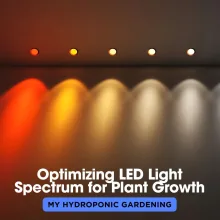
Spectral Considerations for Plant Growth
Different light colors influence various aspects of plant growth:
- Red light (640-660 nm) is crucial for flowering and fruiting.
- Blue light (450-495 nm) supports vegetative growth and leaf development.
- Full-spectrum white light mimics natural sunlight and supports all growth stages.
- UV light can enhance plant color and increase nutrient content.
- IR light can aid in flowering and fruiting for some plants.
Downsides of LED Grow Lights
While LED grow lights offer numerous advantages, they do have some drawbacks:
- Higher initial cost: Quality LED grow lights can be more expensive upfront compared to traditional lighting options.
- Complexity: The wide range of options and technical specifications can be overwhelming for beginners.
- Potential for light burn: High-intensity LEDs placed too close to plants can cause damage.
- Lack of heat: In colder climates, the reduced heat output may require additional heating for optimal growing conditions.
- Blue light hazard: Some high-powered LEDs emit intense blue light that can be harmful to human eyes without proper protection.
Conclusion
LED grow lights have revolutionized indoor and hydroponic gardening, offering energy efficiency, customizable spectrums, and long lifespans. When choosing LED grow lights for your hydroponic system, consider factors such as spectrum coverage, efficiency, heat management, and durability. While they may have a higher upfront cost and some complexities, the benefits of LED grow lights often outweigh the drawbacks for most hydroponic growers.
As technology continues to advance, we can expect even more efficient and customizable LED grow light solutions in the future. These innovations will likely address current limitations and further improve the indoor growing experience. For hydroponic enthusiasts looking to optimize their plant growth and energy consumption, LED grow lights represent a promising and continually evolving lighting solution.curity for generations to come.
#1 Recommended Hydroponic Smart Kit | #2 Recommended Hydroponic Smart Kit |
| | |
Summary and FAQs
How do I choose the right spectrum for my hydroponic plants?
The ideal spectrum depends on your plants and their growth stage. Generally, a full-spectrum white light is versatile and suitable for most plants throughout their lifecycle. For more specific needs, use more blue light (450-495 nm) for vegetative growth and more red light (640-660 nm) for flowering and fruiting. Some advanced LED grow lights offer adjustable spectrums, allowing you to customize the light for different growth stages.
Are more expensive LED grow lights always better for hydroponics?
Not necessarily. While higher-priced LED grow lights often offer better quality, efficiency, and features, the best light for your setup depends on your specific needs. Consider factors like the size of your growing area, the types of plants you’re growing, and your budget. Sometimes, a mid-range light with the right specifications can be more suitable than the most expensive option. Always compare the PPFD output, spectrum coverage, and energy efficiency rather than just the price.
How do I calculate the right wattage of LED grow lights for my hydroponic system?
Instead of focusing solely on wattage, consider the PPFD (Photosynthetic Photon Flux Density) and DLI (Daily Light Integral) requirements of your plants. As a general rule, aim for 32-50 watts per square foot for high-light plants. However, LED efficiency varies, so it’s better to look at the PPFD values provided by the manufacturer. Aim for a PPFD of 300-600 μmol/m²/s for leafy greens and 600-900 μmol/m²/s for fruiting plants. Multiply the PPFD by the number of hours your lights are on to get the DLI, which should typically be between 10-40 mol/m²/day, depending on the plant.
Can I use regular LED bulbs instead of specialized grow lights for my hydroponic system?
While it’s possible to use regular LED bulbs, they are not optimized for plant growth and are generally inefficient compared to dedicated grow lights. Regular LEDs often lack the specific wavelengths and intensity needed for optimal plant growth. They typically have a lower PPFD output and may not provide the full spectrum that plants need throughout their growth cycle. For best results in hydroponics, it’s recommended to use specialized LED grow lights that are designed to provide the right spectrum and intensity for plant growth.
How do LED grow lights compare to HPS lights for larger hydroponic setups?
LED grow lights have several advantages over HPS (High-Pressure Sodium) lights for larger hydroponic setups:
- Energy Efficiency: LEDs typically use 40-60% less energy than HPS lights for comparable light output.
- Heat Management: LEDs produce less heat, reducing cooling costs and allowing closer placement to plants.
- Lifespan: Quality LEDs can last 50,000+ hours, compared to 10,000-20,000 hours for HPS bulbs.
- Spectrum Control: LEDs offer better control over the light spectrum, allowing customization for different growth stages.
However, HPS lights still have some advantages:
- Lower Initial Cost: HPS systems are often cheaper upfront, though this gap is narrowing.
- Deep Canopy Penetration: HPS lights can penetrate deeper into plant canopies, which can be beneficial for some crops.
For larger setups, the long-term energy savings and reduced heat management needs often make LEDs the preferred choice, despite the higher initial investment. However, some growers use a combination of both LED and HPS lights to leverage the benefits of each technology. using general white light. However, always monitor your plants’ response and adjust accordingly.