Calculating the Ideal Wattage and Coverage for Your Hydroponic Setup | Best Hydroponics
Calculating the ideal wattage and coverage for a hydroponic setup is crucial for optimal plant growth. The process involves understanding key light measurements such as PAR, PPFD, and DLI, and assessing the specific needs of your growing space and plants. To determine the required wattage, you need to calculate the PPFD based on the plants’ DLI requirements and then use this information along with the coverage area and LED efficacy. Achieving uniform light distribution is important, often requiring multiple smaller lights rather than one large fixture.
Modern LED systems offer features like dimming and daisy chain controls for fine-tuning. Regular monitoring and adjustment of the lighting system are essential, as is considering factors like heat management and plant circadian rhythms. While the process may seem complex, the benefits of a well-designed LED lighting system for hydroponics far outweigh the potential challenges, resulting in optimized plant growth and yield.
#1 Recommended Hydroponic Smart Kit | #2 Recommended Hydroponic Smart Kit |
 |  |
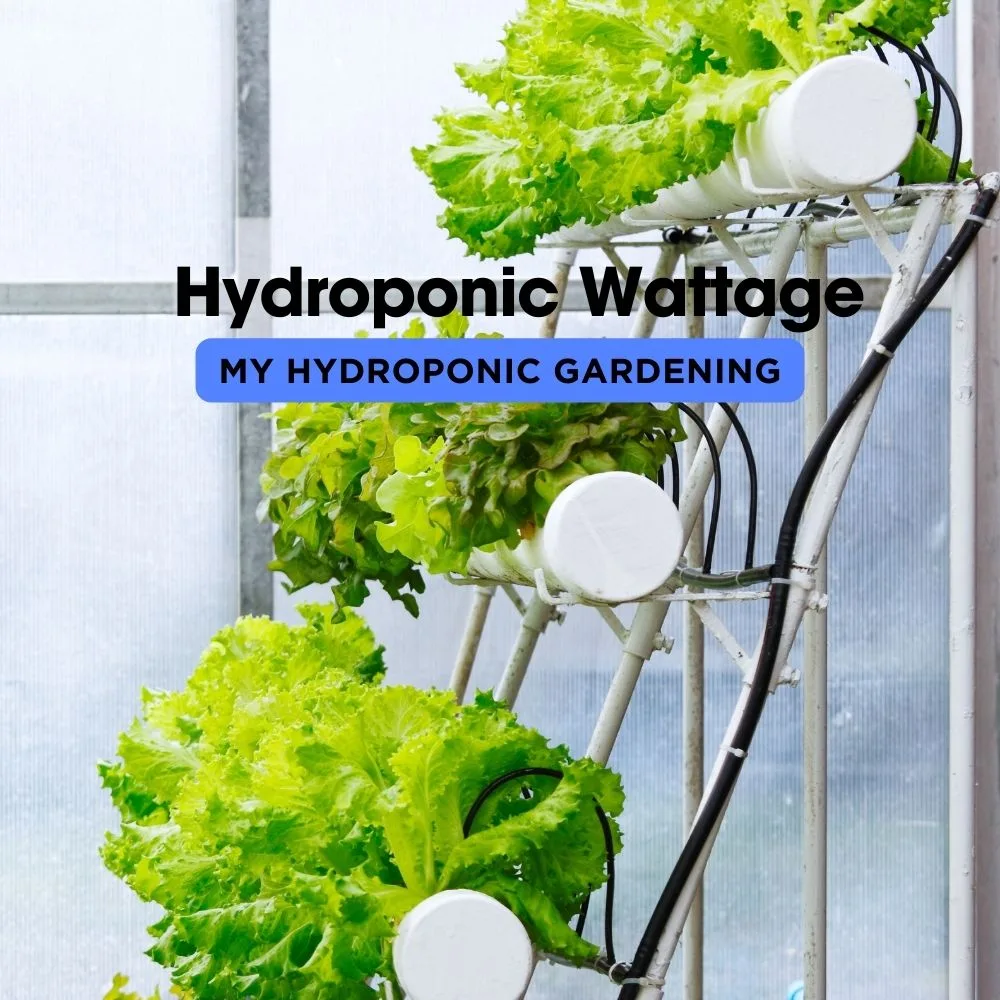
Calculating the Ideal Wattage and Coverage for Your Hydroponic Setup
In the world of hydroponic gardening, lighting plays a crucial role in plant growth and development. Calculating the ideal wattage and coverage for your hydroponic setup is essential for achieving optimal results. This article will guide you through the process, providing up-to-date information and highlighting potential downsides.
Understanding Light Science for Hydroponics
To effectively calculate the ideal wattage and coverage for your hydroponic system, it’s crucial to understand key light measurements. Photosynthetically Active Radiation (PAR), Photosynthetic Photon Flux Density (PPFD), and Daily Light Integral (DLI) are essential metrics for quantifying light in ways relevant to plant growth.
PAR represents the range of light wavelengths (400-700 nm) that plants use for photosynthesis. PPFD measures the number of photons in the PAR range that reach a specific area per second, expressed in μmol/m²/s. DLI calculates the total amount of PAR received by a plant over 24 hours, measured in mol/m²/day.
Recent advancements in LED technology have made it easier to provide plants with specific light spectrums. Different wavelengths affect plant development differently, influencing aspects such as stem elongation, leaf expansion, and flowering. However, it’s important to note that overly narrow spectrum lights may lead to imbalanced growth.
Assessing Your Hydroponic Setup
Before selecting grow lights, evaluate your growing space. Measure the area and decide between vertical or horizontal systems. Understanding the specific light requirements of your plants is crucial, as different species and growth stages need varying light intensities.
For instance, leafy greens typically require a DLI of 10-17 mol/m²/day, while fruiting plants like tomatoes need 20-30 mol/m²/day. The reflectivity of surrounding surfaces can impact light distribution, potentially reducing the number of lights needed but also creating potential hotspots.
Calculating Light Requirements
Accurate light calculations are vital for plant health and productivity. To calculate the ideal wattage, you need to determine the required PPFD for your plants and the coverage area.
The formula to calculate DLI from PPFD is:
DLI = PPFD × (photoperiod in seconds) ÷ 1,000,000
For example, if your plants require a DLI of 20 mol/m²/day and you’re using a 16-hour photoperiod:
20 = PPFD × (16 × 3600) ÷ 1,000,000
PPFD ≈ 347 μmol/m²/s
Now, to determine the wattage needed, you’ll need to know the efficacy of your LED lights (μmol/J). Modern high-quality LEDs typically have an efficacy of 2.5-3.0 μmol/J.
Wattage = (PPFD × coverage area in m²) ÷ efficacy
For a 4 m² area with our calculated PPFD of 347 μmol/m²/s and assuming an LED efficacy of 2.7 μmol/J:
Wattage = (347 × 4) ÷ 2.7 ≈ 514 watts
It’s important to note that these calculations provide a baseline. Factors such as plant density, growth stage, and environmental conditions may necessitate adjustments.
Determining Optimal Light Coverage
Achieving uniform light distribution is crucial for consistent plant growth. The size and shape of your grow area influence light distribution. For rectangular areas, it’s often best to use multiple smaller lights rather than one large light to ensure even coverage.
PAR maps are invaluable tools for visualizing light distribution. They help identify hotspots or dead zones in your setup. Many LED manufacturers provide PAR maps for their fixtures, which can guide your light placement.
A potential downside of striving for perfect uniformity is increased equipment costs. Sometimes, a slightly less uniform setup can still produce good results while being more cost-effective.
Fine-tuning Your LED Grow Light Setup
Modern LED systems offer advanced features like dimming capabilities and daisy chain controls. These allow you to adjust light intensity based on plant growth stages and can simplify the management of multiple lights.
Positioning lights at the right height is crucial. While LEDs produce less heat than traditional grow lights, they can still cause light stress if placed too close to plants. Start with the manufacturer’s recommended hanging height and adjust based on plant response.
Reflective surfaces can maximize light efficiency, but be cautious of creating hotspots. Light movers can help distribute light more evenly and penetrate the canopy better, but they add complexity and potential points of failure to your system.
Monitoring and Adjusting Your Lighting System
Continuous monitoring and adjustment are key to maintaining an effective grow light system. Signs of inadequate lighting include elongated stems and pale leaves, while leaf curling or bleaching may indicate excessive light.
Using plant growth and yield as indicators of lighting effectiveness provides practical benchmarks. However, it’s important to consider other factors that might affect plant health, such as nutrient levels and temperature.
Advanced Considerations
Heat management is crucial in hydroponic setups. While LEDs produce less heat than HID lights, they still generate some heat that needs to be managed to maintain optimal growing conditions.
Integrating lighting with other environmental factors like temperature and humidity is essential for a holistic approach to plant growth. Some advanced systems use sensors to automatically adjust light intensity based on environmental conditions.
Recent research has highlighted the importance of considering plant circadian rhythms when designing lighting schedules. Some studies suggest that mimicking natural light patterns can improve plant health and yield, but this may increase system complexity and energy usage.
Conclusion
Calculating the ideal wattage and coverage for your hydroponic setup involves understanding light science, assessing your growing space, and considering your specific plant needs. While the process may seem complex, the rewards of optimized plant growth and yield make it worthwhile.
Remember that these calculations provide a starting point. Regular monitoring and willingness to adjust your setup based on plant response are key to success. As LED technology continues to advance, stay informed about new developments that could further improve your hydroponic lighting system.
By balancing scientific knowledge, economic considerations, and plant requirements, you can create an optimal lighting environment for your hydroponic garden. While there may be challenges in achieving perfect light distribution or managing heat, the benefits of a well-designed LED lighting system far outweigh the potential downsides.
#1 Recommended Hydroponic Smart Kit | #2 Recommended Hydroponic Smart Kit |
| | |
Summary and FAQs
How do I calculate the PPFD needed for my hydroponic plants?
To calculate the required PPFD, use the formula: PPFD = (DLI × 1,000,000) ÷ (photoperiod in seconds). For example, if your plants need a DLI of 20 mol/m²/day with a 16-hour photoperiod, the calculation would be: PPFD = (20 × 1,000,000) ÷ (16 × 3600) ≈ 347 μmol/m²/s.
What’s the formula for determining the wattage needed for my grow lights?
The formula for calculating wattage is: Wattage = (PPFD × coverage area in m²) ÷ LED efficacy. For instance, if you need a PPFD of 347 μmol/m²/s for a 4 m² area, and your LED lights have an efficacy of 2.7 μmol/J, the calculation would be: Wattage = (347 × 4) ÷ 2.7 ≈ 514 watts.
How does the DLI requirement differ for various plants in a hydroponic setup?
DLI requirements vary depending on the plant type. For example, leafy greens typically require a DLI of 10-17 mol/m²/day, while fruiting plants like tomatoes need a higher DLI of 20-30 mol/m²/day. It’s important to research the specific light requirements for your chosen plants.
What factors should I consider when determining optimal light coverage for my hydroponic system?
Key factors include the size and shape of your grow area, the type of plants you’re growing, and their growth stages. For rectangular areas, using multiple smaller lights often provides more even coverage than one large light. PAR maps can help visualize light distribution and identify hotspots or dead zones in your setup.
How can I tell if my hydroponic plants are receiving too much or too little light?
Signs of inadequate lighting include elongated stems and pale leaves. Conversely, leaf curling or bleaching may indicate excessive light. Regularly monitoring plant growth and yield can provide practical benchmarks for lighting effectiveness. However, remember to consider other factors that might affect plant health, such as nutrient levels and temperature.