Positioning LED Grow Lights For Hydroponic | Best Hydroponics
Proper positioning of LED grow lights is crucial for successful hydroponic cultivation. The article explores key factors in LED placement, including mounting height, light intensity, and spectrum. Three main strategies are discussed: static placement, dynamic placement, and supplemental lighting. Each hydroponic system (NFT, DWC, aeroponic, vertical) requires a tailored approach to light positioning. The optimal distance between lights and plants is generally around 18 inches, but varies based on plant needs and light intensity.
The article emphasizes the importance of understanding light spectrums and their effects on plant growth. It also covers the significance of even light distribution and the use of reflective materials to maximize efficiency. While LED grow lights offer numerous benefits, the article notes potential drawbacks such as high initial costs and complexity. Regular monitoring and adjustment of light positioning are essential for optimal plant growth in hydroponic systems.
#1 Recommended Hydroponic Smart Kit | #2 Recommended Hydroponic Smart Kit |
 |  |
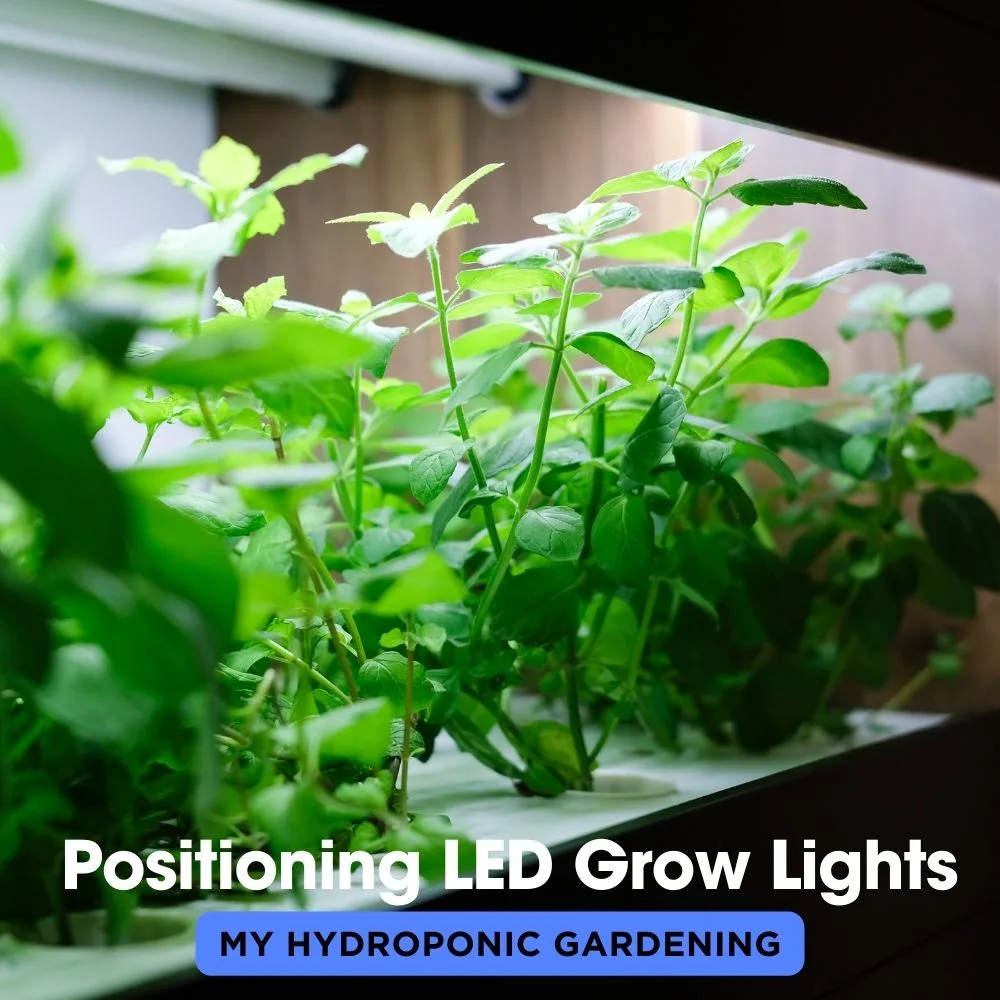
Positioning LED Grow Lights for Hydroponics: Optimizing Plant Growth in Controlled Environments
The advent of LED grow lights has revolutionized hydroponic cultivation, offering growers unprecedented control over their plants’ light environment. Proper positioning of these lights is crucial for maximizing plant growth and yield while minimizing energy consumption. This article explores the key factors in LED grow light positioning for hydroponic systems, highlighting both benefits and potential drawbacks.
Understanding LED Grow Lights in Hydroponics
LED grow lights have become increasingly popular in hydroponic setups due to their energy efficiency, customizable spectrums, and reduced heat output. Unlike traditional high-pressure sodium (HPS) or fluorescent lights, LEDs allow growers to tailor light recipes to specific plant needs, potentially improving growth rates and crop quality.
The fundamental factors in LED grow light positioning include mounting height, light intensity, and spectrum. These elements must be carefully balanced to meet the varying needs of different plant species and growth stages. The goal is to provide optimal light coverage without causing light stress or energy waste.
Placement Strategies
Growers typically employ one of three main strategies for LED light positioning:
- Static Placement: This method involves setting lights at a fixed height throughout the growing cycle. While simple and low-maintenance, it may not provide optimal light levels for all growth stages, potentially limiting plant performance.
- Dynamic Placement: This strategy involves adjusting light height and intensity as plants grow. By maintaining an optimal distance (often around 1.5 feet) between the light and plant canopy, growers can ensure consistent light delivery. Intensity is gradually increased, reaching maximum during flowering.
- Supplemental Lighting: This approach uses additional lights to enhance overall coverage, especially in larger or more complex setups. Lights can be placed very close to plants (1-6 inches) at low intensity or strategically positioned to illuminate underserved areas of the canopy.
Each strategy has its merits, and the choice often depends on the scale of operation, plant types, and available resources.
Optimal LED Placement for Different Hydroponic Systems
Different hydroponic systems require tailored approaches to LED placement:
- Nutrient Film Technique (NFT): Lights are typically positioned above the shallow channels to ensure even coverage.
- Deep Water Culture (DWC): Lights are suspended over the reservoir, with height adjustments crucial as plants grow taller.
- Aeroponics: These systems often benefit from targeted lighting at multiple levels to reach plants suspended in air.
- Vertical systems: These present unique challenges, often requiring strategically placed lights at various heights to ensure all plants receive adequate illumination.
LED Grow Light Distance and Intensity
The distance between LED grow lights and plants is critical for optimal growth. While a general rule of thumb is maintaining about 1.5 feet between the light and plant canopy, this can vary based on factors such as plant type, growth stage, and light intensity.
Improper distance can lead to issues like light burn (when too close) or plant stretching (when too far). Grow light height calculators can assist in determining optimal positioning, but regular monitoring and adjustment are essential.
Light intensity, measured in metrics like PAR (Photosynthetically Active Radiation) and PPFD (Photosynthetic Photon Flux Density), must be tailored to plant needs. Different plants have varying light requirements, which also change throughout their growth cycle. Light meters and smartphone apps can be valuable tools for accurately measuring and monitoring light intensity.
LED Spectrum Considerations
The light spectrum emitted by LED grow lights significantly impacts plant growth. Different wavelengths influence various aspects of plant development:
- Blue light (400-500nm) promotes vegetative growth and leaf development.
- Red light (600-700nm) enhances flowering and fruiting.
- Far-red light (700-750nm) can influence plant morphology and flowering time.
Full-spectrum LEDs attempt to mimic natural sunlight, providing a balanced diet of light. However, some growers prefer targeted spectrum LEDs to fine-tune light provision for specific growth stages or plant types.
Coverage Area and Light Distribution
Ensuring adequate and even light distribution is essential for uniform plant growth. Calculating the required coverage area based on grow space and plant size helps in selecting appropriate lighting. Proper overlapping of light footprints prevents dark spots in larger setups.
Using reflective materials on walls and surfaces can significantly improve light efficiency by bouncing light back to plants, maximizing the use of emitted light and improving overall coverage.
Advanced Technologies and Environmental Factors
The field of LED grow lights is rapidly advancing. Smart LED systems with programmable schedules can mimic natural light cycles or create custom light recipes for specific crops. Sensor-integrated lights can automatically adjust based on plant needs or environmental conditions.
Light positioning interacts with other environmental factors in hydroponic systems. Proper placement helps manage heat distribution and humidity levels. Ensuring good air circulation around lights and plants is essential for preventing heat buildup and promoting healthy gas exchange.
Economic Considerations and Potential Drawbacks
While LED grow lights often have higher upfront costs compared to traditional lighting, they typically offer long-term savings through energy efficiency and longevity. Optimized lighting can significantly improve yields, potentially offsetting initial investments through increased production.
However, there are potential drawbacks to consider:
- Initial cost: High-quality LED grow lights can be expensive, which may be a barrier for small-scale or hobby growers.
- Complexity: The multitude of options in spectrum, intensity, and positioning can be overwhelming for beginners.
- Over-reliance on technology: Growers may become too dependent on automated systems, potentially missing subtle plant cues.
- Heat management: While LEDs produce less heat than HPS lights, they still generate some heat that needs to be managed, especially in enclosed spaces.
- Potential for light stress: Improper positioning or intensity can lead to light stress, negatively impacting plant growth.
Conclusion
Proper positioning of LED grow lights is a critical factor in successful hydroponic cultivation. The key strategies of static, dynamic, and supplemental lighting offer growers flexibility in their approach. Regular monitoring and willingness to adjust based on plant responses are essential for success.
As technology continues to advance, LED grow lights are likely to become even more efficient and tailored to specific growing needs, further enhancing the potential of hydroponic systems. However, growers must balance the benefits of advanced technology with practical considerations and a deep understanding of plant biology.
By carefully considering factors such as light distance, intensity, spectrum, and distribution, hydroponic growers can create optimal light environments for their plants, potentially leading to improved yields, quality, and resource efficiency. As with any aspect of hydroponics, success with LED grow lights comes from a combination of scientific understanding, careful planning, and attentive plant care.
#1 Recommended Hydroponic Smart Kit | #2 Recommended Hydroponic Smart Kit |
| | |
Summary and FAQs
How far should LED grow lights be from hydroponic plants?
The optimal distance between LED grow lights and hydroponic plants typically ranges from 12 to 24 inches (30-60 cm), with a general rule of thumb being about 18 inches (45 cm). However, this can vary depending on the light intensity, plant species, and growth stage. It’s important to monitor your plants for signs of light stress (such as leaf curling or bleaching) or insufficient light (stretching) and adjust accordingly. Using a PAR meter can help determine the ideal distance for your specific setup.
How do I know if my hydroponic plants are getting enough light?
There are several signs to look for:
- Healthy leaf color (not pale or yellowing)
- Compact growth (not stretching or leggy)
- Proper node spacing
- Steady growth rate You can also use a PAR meter to measure light intensity at the plant canopy level. For most hydroponic crops, a PPFD (Photosynthetic Photon Flux Density) of 300-600 μmol/m²/s is suitable for vegetative growth, while flowering plants may require up to 900 μmol/m²/s.
Should I use full-spectrum or targeted spectrum LED lights for my hydroponic system?
The choice between full-spectrum and targeted spectrum LEDs depends on your specific needs:
- Full-spectrum LEDs are versatile and mimic natural sunlight, making them suitable for a wide range of plants and growth stages.
- Targeted spectrum LEDs allow you to customize light recipes for specific crops or growth phases (e.g., more blue light for vegetative growth, more red light for flowering). For beginners or mixed crops, full-spectrum LEDs are often a good choice. More experienced growers or those focusing on specific crops might benefit from targeted spectrum lights.
How often should I adjust the position of my LED grow lights in a hydroponic system?
If you’re using a dynamic placement strategy, you should adjust your lights:
- As plants grow taller (typically every 1-2 weeks during vigorous growth)
- When transitioning between growth stages (e.g., from vegetative to flowering)
- If you observe signs of light stress or insufficient light Some growers check and adjust their lights weekly as part of their regular maintenance routine. With rapidly growing plants, you might need to adjust more frequently.
Can I use the same LED positioning strategy for all types of hydroponic systems?
While the basic principles of LED positioning apply to all hydroponic systems, specific adjustments may be needed:
- Vertical systems require careful positioning to ensure even light distribution at different heights.
- Deep Water Culture (DWC) systems might need more frequent height adjustments as plants can grow quickly.
- For Nutrient Film Technique (NFT) or shallow systems, ensure lights are positioned to cover the entire growing area without creating hot spots.
- Aeroponic systems might benefit from supplemental side lighting to reach lower plant parts. Always consider the unique characteristics of your hydroponic system when positioning your LED grow lights.