Optimizing LED Light Spectrum for Plant Growth | Best Hydroponics
Optimizing LED light spectrum for plant growth has revolutionized indoor cultivation, offering precise control over light quality and intensity. Understanding plant physiology and light utilization is crucial for effective optimization. LED systems allow tailoring of light spectra for different growth stages, with blue light promoting compact growth in seedlings, a balanced spectrum supporting vegetative growth, and increased red light enhancing flowering and fruiting. Advanced techniques include dynamic spectrum control, pulsed lighting, and UV/far-red supplementation.
Proper measurement and monitoring of light output are essential for maintaining optimal growing conditions. While LED systems offer significant energy savings and customization options, they present challenges such as complexity, potential over-optimization, and high initial costs. Future trends point towards integration with smart farming technologies and IoT. Despite some drawbacks, optimizing LED light spectrum provides tremendous potential for improving crop yield, quality, and resource efficiency in controlled environment agriculture, contributing to more sustainable and productive farming practices.
#1 Recommended Hydroponic Smart Kit | #2 Recommended Hydroponic Smart Kit |
 |  |
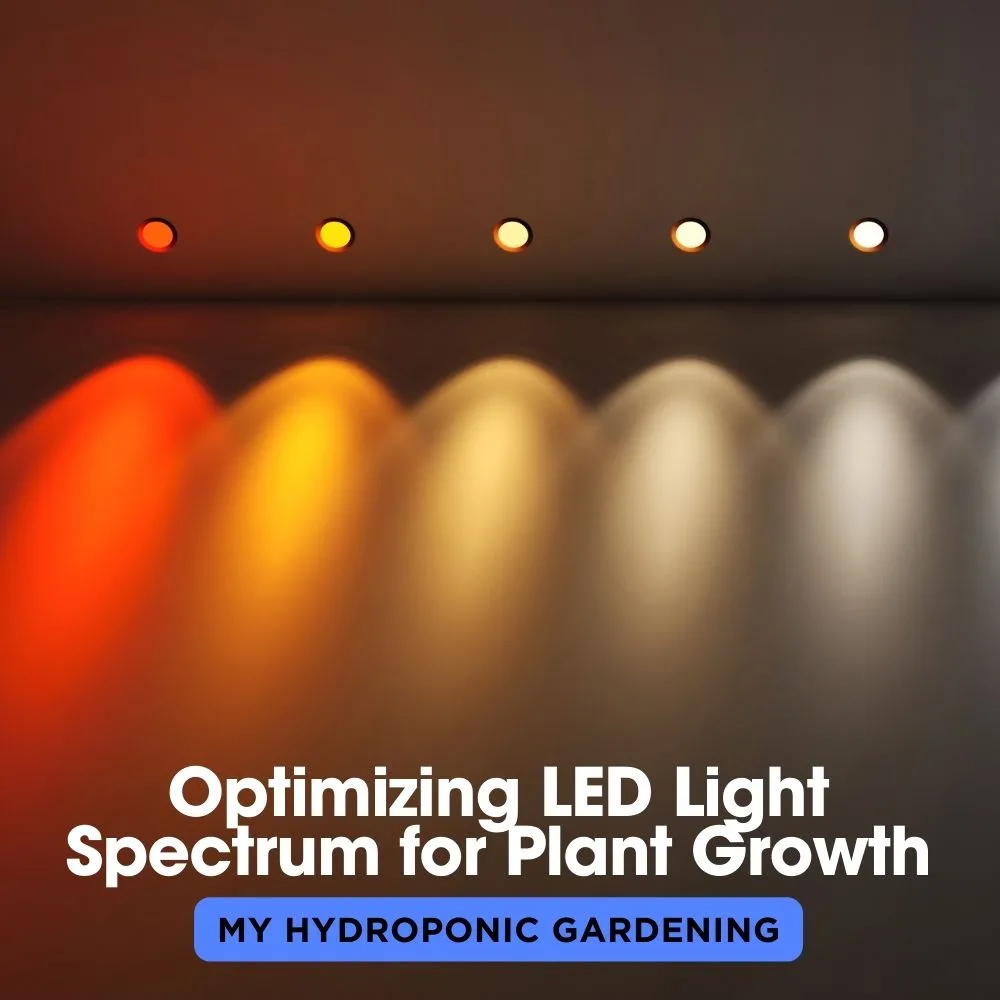
Optimizing LED Light Spectrum for Plant Growth
The advent of LED grow lights has revolutionized indoor plant cultivation, offering unprecedented control over light spectrum and intensity. This technological leap has enabled growers to fine-tune their lighting systems to match the specific needs of plants throughout their growth cycle, resulting in improved yields, quality, and energy efficiency. In this article, we’ll explore the intricacies of optimizing LED light spectrum for plant growth, including recent advancements and potential drawbacks.
Understanding Light and Plant Physiology
To optimize LED light spectrum, it’s crucial to understand how plants utilize light. Photosynthesis, the process by which plants convert light energy into chemical energy, primarily uses light in the blue (450-495 nm) and red (620-750 nm) portions of the spectrum. Chlorophyll a and b, the primary photosynthetic pigments, absorb light most efficiently in these ranges.
However, plants also utilize other wavelengths for various physiological processes. Recent research has shown that green light (495-570 nm), once thought to be largely reflected by plants, plays a role in penetrating dense canopies and regulating plant development. Far-red light (750-850 nm) influences flowering and stem elongation, while UV light (280-400 nm) can enhance plant defenses and flavor compounds.
Two key metrics for measuring light in horticulture are Photosynthetically Active Radiation (PAR) and Photosynthetic Photon Flux Density (PPFD). PAR represents the range of light wavelengths used in photosynthesis (typically 400-700 nm), while PPFD measures the number of photons in the PAR range that hit a square meter per second. Understanding these concepts helps growers provide the right quality and quantity of light for optimal plant growth.
Tailoring LED Spectrum for Different Growth Stages
One of the most significant advantages of LED grow lights is the ability to customize the spectrum for different growth stages. Recent studies have shown that plants have varying light requirements throughout their life cycle:
- Seedling Stage: Young plants benefit from a spectrum rich in blue light (around 450 nm), which promotes compact growth and strong root development. A color temperature of 5000K-6500K is often recommended for this stage.
- Vegetative Stage: As plants mature, they require a more balanced spectrum. While blue light remains important for leaf development and chlorophyll production, increasing the proportion of red light (around 660 nm) promotes stem and leaf growth. A color temperature of 4000K-5000K is typically suitable for this stage.
- Flowering and Fruiting Stage: During this critical phase, plants benefit from an increased ratio of red to blue light. Red light, particularly around 660 nm, stimulates flowering and fruit development. Far-red light (730 nm) can also enhance flowering in some species. A lower color temperature of 3000K-4000K is often used at this stage.
Advanced Spectrum Optimization Techniques
Recent advancements in LED technology have led to more sophisticated spectrum optimization techniques:
- Dynamic Spectrum Control: Some modern LED systems allow for real-time adjustment of the light spectrum throughout the day or growth cycle. This mimics natural light variations and can optimize plant growth and energy use.
- Pulsed Lighting: Research has shown that delivering light in short, high-intensity pulses can be more efficient than continuous lighting, potentially reducing energy consumption without compromising plant growth.
- UV and Far-Red Supplementation: Adding small amounts of UV-A (315-400 nm) or UV-B (280-315 nm) light can enhance plant flavor, aroma, and nutritional value in some crops. Similarly, far-red light can influence plant morphology and flowering time.
- Green Light Inclusion: While less efficient for photosynthesis, including some green light (500-600 nm) in the spectrum can improve overall plant development and visual inspection of plants.
Measuring and Monitoring Light Output
Accurate measurement and monitoring of light output are crucial for optimizing plant growth. Modern spectrometers and quantum sensors allow growers to precisely measure the spectral distribution and intensity of their LED systems. Regular calibration and monitoring ensure that plants receive consistent, optimal light throughout their growth cycle.
Some advanced LED systems now incorporate built-in sensors and software that automatically adjust the spectrum and intensity based on plant feedback and growth stage, further optimizing the growing environment.
Energy Efficiency and Cost Considerations
While LED grow lights offer significant energy savings compared to traditional horticultural lighting systems, the initial investment can be substantial. However, factors such as longer lifespan (typically 50,000+ hours), lower heat output (reducing cooling costs), and potential government incentives for energy-efficient technologies can make LEDs cost-effective in the long run.
Recent advancements in LED chip technology have further improved energy efficiency, with some modern horticultural LEDs achieving photosynthetic photon efficacy (PPE) of over 3 μmol/J, compared to 1.7-1.9 μmol/J for high-pressure sodium (HPS) lamps.
Potential Drawbacks and Challenges
Despite their many advantages, there are some potential downsides to consider when optimizing LED light spectrum for plant growth:
- Complexity: The vast array of spectrum options can be overwhelming for growers, and determining the optimal spectrum for each crop and growth stage may require extensive experimentation.
- Over-optimization Risk: Highly tailored light spectra may produce plants that struggle when transferred to environments with different light conditions, such as in greenhouse production or outdoor cultivation.
- Blue Light Hazards: High-intensity blue light can be harmful to human eyes, necessitating proper safety measures in grow facilities.
- Heat Management: While LEDs produce less heat than traditional grow lights, they still generate some heat that must be managed, especially in large-scale operations.
- Initial Cost: The upfront cost of advanced LED systems with spectrum control capabilities can be prohibitive for some growers.
Future Trends and Conclusion
The future of LED grow light optimization is closely tied to advancements in smart farming and the Internet of Things (IoT). Integrating LED lighting systems with environmental sensors, machine learning algorithms, and automation systems promises even greater control and efficiency in plant cultivation.
Research into targeted photomorphogenesis – using specific light recipes to influence particular plant traits or compounds – is an exciting frontier that could lead to highly specialized lighting solutions for different crops and end-use purposes.
In conclusion, optimizing LED light spectrum for plant growth offers tremendous potential for improving crop yield, quality, and resource efficiency in controlled environment agriculture. By understanding plant physiology, leveraging advanced LED technologies, and carefully monitoring plant responses, growers can create ideal light conditions for their crops. However, it’s important to balance the pursuit of optimization with practical considerations and to stay informed about ongoing research and technological developments in this rapidly evolving field.
As LED technology continues to advance, we can expect even more precise and efficient lighting solutions that will further revolutionize indoor and greenhouse cultivation, contributing to more sustainable and productive agricultural practices worldwide.
#1 Recommended Hydroponic Smart Kit | #2 Recommended Hydroponic Smart Kit |
| | |
Summary and FAQs
What is the ideal LED light spectrum for overall plant growth?
There isn’t a one-size-fits-all spectrum for all plants and growth stages. Generally, a full spectrum that includes peaks in blue (450-495 nm) and red (620-750 nm) light is beneficial for most plants. However, the optimal spectrum can vary depending on the plant species and growth stage. For overall growth, a spectrum with about 20-30% blue light and 70-80% red light, with some green and far-red included, is often recommended. It’s best to adjust the spectrum based on the specific needs of your plants and their current growth stage.
How does changing the LED spectrum affect different stages of plant growth?
Different light spectra can significantly influence plant development at various stages:
- Seedling stage: Blue-rich light (around 450 nm) promotes compact growth and strong root development.
- Vegetative stage: A balance of blue and red light encourages leaf development and overall plant growth.
- Flowering/fruiting stage: Increased red light (especially around 660 nm) and the addition of far-red light (730 nm) can enhance flowering and fruit development. By adjusting the spectrum throughout the growth cycle, you can optimize plant development at each stage.
Are white LED lights effective for growing plants, or should I use colored LEDs?
White LED lights can be effective for growing plants, as they typically provide a broad spectrum that includes the essential blue and red wavelengths. However, specialized horticultural LEDs that allow for spectrum customization can offer more control and potentially better results. These often use a combination of colored LEDs (typically red and blue) along with white LEDs to create a full spectrum. The choice between white LEDs and customizable colored LEDs often depends on the complexity of your growing operation and the specific needs of your plants.
How important is green light in LED grow light spectrum?
While plants primarily use blue and red light for photosynthesis, recent research has shown that green light plays a more significant role than previously thought. Green light (495-570 nm) can penetrate deeper into the plant canopy, reaching lower leaves that may be shaded from other light colors. It also contributes to photosynthesis, albeit less efficiently than blue and red light. Including some green light (10-20% of the total output) in your LED spectrum can promote overall plant development, improve plant visibility for monitoring purposes, and potentially enhance growth in dense canopies.
How often should I adjust the LED light spectrum for optimal plant growth?
The frequency of spectrum adjustments depends on your growing setup and plant needs. At a minimum, you should adjust the spectrum for each major growth stage (seedling, vegetative, flowering/fruiting). However, more frequent adjustments can further optimize growth. Some advanced systems allow for daily spectrum changes to mimic natural light variations. If you’re using a manual system, weekly adjustments based on plant response and growth stage can be beneficial. Always monitor your plants closely and be prepared to fine-tune the spectrum if you notice any signs of stress or suboptimal growth.