LED Grow Lights for Hydroponic Gardening | Best Hydroponics
LED grow lights have revolutionized hydroponic gardening, offering superior energy efficiency, longevity, and customizable light spectrums tailored to plant needs. These lights outperform traditional options like HPS and fluorescent lamps, with modern LEDs converting up to 3.0 μmol/J of energy into usable light. They provide optimal wavelengths for different growth stages, maximizing PAR output while minimizing energy consumption. LED grow lights come in various forms, including full-spectrum, adjustable, and specialized options for different setups.
Key benefits include low heat emission, long lifespan, and versatility in various hydroponic applications. When selecting LED grow lights, factors like PAR output, coverage area, and dimming capabilities are crucial. While initial costs may be higher, the long-term benefits in energy savings, crop quality, and yield improvements make LED grow lights a smart choice for the future of hydroponic cultivation. Emerging trends include AI-driven systems and integration with smart farming technologies.
#1 Recommended Hydroponic Led Grow Light | #2 Recommended Hydroponic Led Grow Light |
 |  |
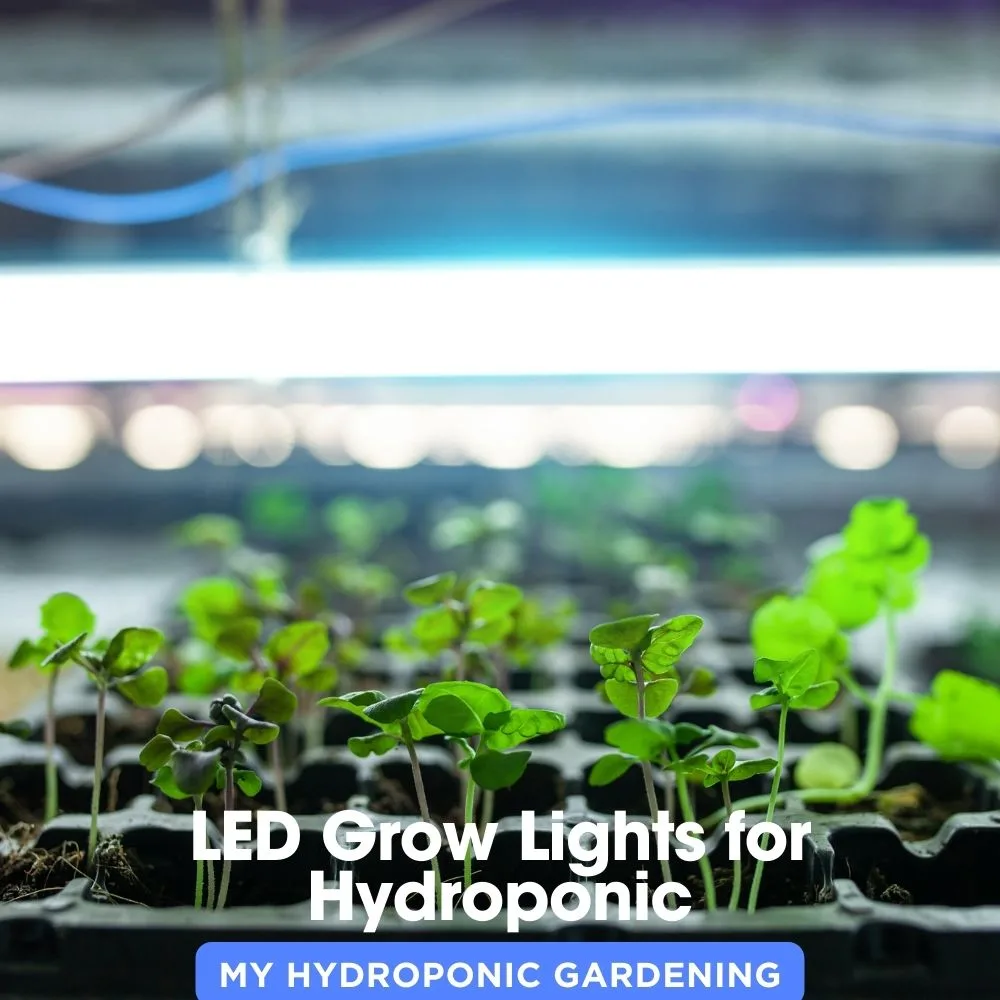
LED Grow Lights for Hydroponic Gardening: Illuminating the Future of Indoor Cultivation
Hydroponic gardening has gained significant traction in recent years, offering a soil-free method of growing plants that maximizes space efficiency and yield. At the heart of this revolutionary growing technique lies a crucial component: lighting. LED grow lights have emerged as the go-to solution for hydroponic enthusiasts and commercial growers alike, providing an efficient and customizable lighting option that outperforms traditional alternatives.
Evolution of Grow Light Technology
The evolution of grow lights has seen LED technology quickly surpass its predecessors, such as High-Pressure Sodium (HPS) and fluorescent lamps. This rapid adoption is primarily due to LEDs’ superior energy efficiency, longevity, and ability to produce specific light spectrums tailored to plant needs. As of 2024, the latest LED grow lights boast even higher efficiency ratings, with some models converting up to 3.0 μmol/J (micromoles per joule) of energy into usable light for plants.
The Science of Light and Plant Growth
Understanding the science behind plant growth and light is crucial for successful hydroponic gardening. Plants rely on light for photosynthesis, the process by which they convert light energy into chemical energy for growth. Different wavelengths of light affect plant development in various ways. Blue light (400-500 nm) promotes vegetative growth and leaf expansion, while red light (600-700 nm) stimulates flowering and fruiting. Modern LED grow lights can be fine-tuned to provide the optimal spectrum for each growth stage, a feature that was difficult to achieve with traditional lighting systems.
The Importance of PAR in Plant Growth
Photosynthetically Active Radiation (PAR), which refers to the light spectrum between 400-700 nanometers, is the most crucial for plant growth. The latest LED grow lights are designed to maximize PAR output while minimizing energy consumption. This efficiency translates to lower operating costs and reduced environmental impact, making LED lights an eco-friendly choice for hydroponic systems.
Key Benefits of LED Grow Lights
The benefits of LED grow lights extend beyond energy efficiency. Their low heat emission reduces the need for additional cooling systems, which is particularly advantageous in controlled indoor environments. LEDs also boast an impressive lifespan, often exceeding 50,000 hours of use, significantly outlasting traditional grow lights. This longevity not only reduces replacement costs but also minimizes disruptions to the growing cycle.
Types of LED Grow Lights for Hydroponics
Modern LED grow lights come in various forms to suit different hydroponic setups. Full-spectrum LEDs provide a balanced mix of wavelengths similar to natural sunlight, ideal for all growth stages. Adjustable LED grow lamps allow growers to modify the spectrum and intensity as plants progress, optimizing growth at each phase. Specialized seedling lights cater to the specific needs of young plants, promoting strong, healthy starts. For larger operations, LED bars offer even coverage across expansive areas, while panel designs provide concentrated light for smaller spaces or supplemental lighting.
Selecting the Right LED Grow Light
When selecting LED grow lights for hydroponic systems, several key features should be considered. PAR output is crucial, as it directly affects plant growth. Coverage area determines how many plants a single light can support effectively. Dimming capabilities and built-in timers allow for precise control over light intensity and duration, mimicking natural day-night cycles. Waterproof ratings are also important for hydroponic environments to protect the lights from humidity and potential water splashes.
Versatility in Hydroponic Applications
The versatility of LED grow lights makes them suitable for various hydroponic applications. They excel in indoor gardens, providing necessary light in spaces without natural sunlight. In vertical farming, LEDs enable efficient use of space by allowing multiple layers of plant growth. Greenhouse operators use LED lights to supplement natural light, extending growing seasons and improving yields. The scalability of LED systems makes them suitable for both small home setups and large commercial operations.
Potential Downsides of LED Grow Lights
Despite the numerous advantages, it’s important to note some potential downsides of LED grow lights. The initial cost of high-quality LED systems can be significantly higher than traditional lighting options, which may be a barrier for some growers. Additionally, the abundance of options in the market can be overwhelming, making it challenging to choose the right system without proper research. Some plants may require a period of adjustment when transitioning from traditional lighting to LEDs, potentially causing temporary stress or growth changes.
The Future of LED Grow Light Technology
Looking to the future, LED grow light technology continues to advance rapidly. Emerging trends include the development of AI-driven lighting systems that can automatically adjust to plant needs based on real-time data. Integration with broader smart farming systems promises to revolutionize indoor agriculture, potentially leading to fully automated growing environments. Research into more efficient diodes and better spectrum control is ongoing, with the goal of further improving energy efficiency and plant growth optimization.
Conclusion: LED Lights as a Game-Changer in Hydroponics
In conclusion, LED grow lights have become an indispensable tool in hydroponic gardening, offering unparalleled control over the growing environment. Their energy efficiency, customizable spectrum, and long lifespan make them an excellent choice for both hobbyist and commercial growers. As technology continues to advance, LED grow lights will play an increasingly crucial role in sustainable and efficient food production, from small home gardens to large-scale commercial operations. While the initial investment may be higher, the long-term benefits in terms of energy savings, crop quality, and yield improvements make LED grow lights a smart choice for the future of hydroponic cultivation.
#1 Recommended Hydroponic Led Grow Light | #2 Recommended Hydroponic Led Grow Light |
| | |
Summary and FAQs
What are the main advantages of using LED grow lights for hydroponic systems compared to traditional lighting options?
The main advantages of using LED grow lights for hydroponic systems compared to traditional lighting options include:
- Energy efficiency: LED grow lights convert a higher percentage of electricity into usable light for plants, often up to 3.0 μmol/J. This results in lower energy consumption and reduced operating costs compared to traditional options like HPS or fluorescent lights.
- Customizable spectrum: LEDs can be engineered to produce specific light wavelengths. This allows growers to provide the exact spectrum needed for different growth stages, optimizing plant development from seedling to flowering.
- Lower heat emission: LEDs produce less heat than traditional lighting options. This reduces the need for additional cooling systems in hydroponic setups, further saving on energy costs and simplifying climate control.
- Longevity: LED grow lights typically have a much longer lifespan, often exceeding 50,000 hours. This durability means less frequent replacements, reducing long-term costs and minimizing disruptions to growing cycles.
- Compact and versatile design: LED lights come in various form factors, from bars to panels, allowing for flexible installation in different hydroponic setups, including vertical farming systems.
- Programmable features: Many LED systems come with built-in timers and dimming capabilities, allowing precise control over light cycles and intensity to mimic natural growing conditions.
- Improved plant health: By providing the optimal light spectrum and intensity, LED grow lights can contribute to healthier plants, potentially increasing yield and crop quality.
- Environmental friendliness: The energy efficiency and long lifespan of LEDs contribute to a reduced carbon footprint compared to traditional lighting options.
While the initial cost of LED grow lights may be higher, these advantages often result in significant long-term benefits for hydroponic growers, both in terms of plant growth and operational efficiency.
How do I choose the right spectrum of LED grow lights for different stages of plant growth in my hydroponic setup?
Choosing the right spectrum of LED grow lights for different stages of plant growth in your hydroponic setup is crucial for optimal plant development. Here’s a guide to help you select the appropriate spectrum:
- Understanding light spectrums:
- Blue light (400-500 nm): Promotes vegetative growth, leaf expansion, and chlorophyll production.
- Red light (600-700 nm): Stimulates flowering, fruiting, and stem elongation.
- Green light (500-600 nm): Enhances plant growth when combined with other spectrums.
- Far-red light (700-750 nm): Influences flowering and plant stretching.
- Seedling and early vegetative stage:
- Use a spectrum with a higher ratio of blue light (around 60-70% blue to 30-40% red).
- This promotes strong root development and compact, bushy growth.
- Late vegetative stage:
- Gradually increase the red light component (50% blue to 50% red).
- This encourages vertical growth and prepares plants for the flowering stage.
- Flowering and fruiting stage:
- Shift to a spectrum with more red light (30% blue to 70% red).
- Include some far-red light to enhance flowering.
- Full-spectrum options:
- For growers who don’t want to change lights between stages, full-spectrum LED grow lights provide a balance of wavelengths suitable for all growth stages.
- These typically include white LEDs which provide a broad spectrum of light.
- Customizable LED systems:
- Some advanced LED grow lights allow you to adjust the spectrum ratios as plants grow.
- This feature provides the most flexibility for optimizing light at each growth stage.
- Consider your specific plants:
- Different plant species may have varying light preferences. Research the specific needs of your crops.
- Leafy greens generally prefer more blue light, while fruiting plants benefit from more red light during flowering.
- Supplemental lighting:
- Consider adding UV-A or UV-B LEDs to enhance plant compounds and natural pest resistance.
- Far-red LEDs can be used to manipulate plant morphology and flowering time.
- Color temperature:
- For a more simplified approach, you can choose LEDs based on color temperature:
- 6500K (cool white) for vegetative growth
- 3000K-4000K (warm white) for flowering and fruiting
- Test and adjust:
- Start with a general spectrum recommendation and observe your plants.
- Be prepared to adjust based on plant response and your specific growing conditions.
Remember, while spectrum is important, other factors like light intensity, photoperiod, and overall environmental conditions also play crucial roles in plant growth. It’s often beneficial to choose LED grow lights that offer some degree of spectrum adjustability, allowing you to fine-tune the light for your specific hydroponic setup and plant needs.
What factors should I consider when determining the appropriate light intensity (PAR output) for my hydroponic plants?
Determining the appropriate light intensity (PAR output) for your hydroponic plants is crucial for optimal growth. Here are the key factors to consider:
- Plant species:
- Different plants have varying light requirements. For example, leafy greens generally need less intense light than fruiting plants like tomatoes or peppers.
- Research the specific light needs of your chosen crops.
- Growth stage:
- Seedlings and young plants typically require less intense light than mature plants.
- Light intensity needs often increase as plants move from vegetative to flowering stages.
- Photosynthetic Photon Flux Density (PPFD):
- PPFD measures the amount of PAR that actually reaches your plants, measured in μmol/m²/s.
- General PPFD ranges:
- Low-light plants: 150-250 μmol/m²/s
- Medium-light plants: 250-450 μmol/m²/s
- High-light plants: 450-850+ μmol/m²/s
- Daily Light Integral (DLI):
- DLI represents the total amount of PAR delivered to a plant over 24 hours.
- Most hydroponic crops require a DLI between 10-30 mol/m²/day.
- Canopy distance:
- The distance between your LED lights and plant canopy affects light intensity.
- Follow manufacturer recommendations and adjust as plants grow.
- Light distribution:
- Ensure even light distribution across your grow area to prevent “hot spots” or shaded areas.
- Growth area size:
- Match your light’s coverage area to your growing space to ensure adequate intensity for all plants.
- Supplemental lighting needs:
- If you’re using LEDs to supplement natural light, consider the varying intensity of sunlight throughout the day and seasons.
- Plant density:
- Higher plant density may require more intense lighting to ensure all plants receive adequate light.
- Environmental factors:
- Temperature and CO2 levels can affect a plant’s ability to utilize light. Higher temperatures and CO2 levels often allow plants to use more intense light effectively.
- Light stress symptoms:
- Watch for signs of light stress in your plants:
- Too much light: leaf bleaching, curling, or burnt edges
- Too little light: elongated stems, pale leaves, slow growth
- Light meter usage:
- Invest in a PAR meter to accurately measure light intensity at plant level.
- This allows for precise adjustments based on actual readings rather than estimates.
- Dimming capabilities:
- Choose LED grow lights with dimming features to adjust intensity as needed.
- Acclimation period:
- Gradually increase light intensity when introducing plants to new lighting to avoid shock.
- Energy efficiency considerations:
- Balance light intensity with energy consumption to optimize growth while managing operating costs.
- Crop rotation:
- If you grow different crops throughout the year, choose a lighting system that can be adjusted to meet varying intensity needs.
Remember, finding the right light intensity often involves some trial and error. Start with general recommendations for your plant species and growth stage, then adjust based on plant response and measurements. Regular monitoring and willingness to make adjustments will help you achieve the optimal light intensity for your hydroponic plants.
Are there any potential drawbacks or challenges to using LED grow lights in hydroponic gardening?
While LED grow lights offer numerous benefits for hydroponic gardening, there are indeed some potential drawbacks and challenges to consider:
- High initial cost:
- Quality LED grow lights often have a higher upfront cost compared to traditional lighting options.
- This can be a significant barrier for small-scale or beginner hydroponic growers.
- Complexity in choosing the right system:
- The wide variety of LED grow light options can be overwhelming.
- Selecting the optimal spectrum, intensity, and coverage for specific plant needs requires research and expertise.
- Heat management in small spaces:
- While LEDs produce less heat than HPS lights, they still generate some heat.
- In small, enclosed grow spaces, this can lead to temperature management challenges.
- Potential for light burn:
- High-intensity LEDs placed too close to plants can cause light burn or bleaching.
- Proper distance management is crucial, which can be challenging as plants grow.
- Color rendition issues:
- Some LED spectrums can make it difficult to visually assess plant health.
- This can lead to delayed identification of issues like nutrient deficiencies or pests.
- Shadowing and light distribution:
- Achieving even light distribution can be challenging, especially in dense canopies.
- This may require careful planning of light placement and potentially more fixtures.
- Plant response variations:
- Some plants may respond differently to LED light compared to natural sunlight or other artificial lights.
- A period of experimentation might be necessary to optimize growth for specific crops.
- Rapid technology evolution:
- The fast pace of LED technology advancement can make systems quickly outdated.
- This might necessitate more frequent upgrades to maintain optimal efficiency.
- Spectrum limitations:
- While customizable, some LED systems may not perfectly replicate the full spectrum of natural sunlight.
- This could potentially impact certain aspects of plant development or crop quality.
- Dependency on electrical systems:
- A power outage can be more detrimental in an LED-lit hydroponic system compared to greenhouse operations.
- Backup power systems might be necessary, adding to overall costs.
- Maintenance and repairs:
- While generally low-maintenance, when LED fixtures do fail, they often require complete replacement rather than simple bulb changes.
- Specialized knowledge may be needed for troubleshooting and repairs.
- Potential eye strain:
- Prolonged exposure to intense LED grow lights can cause eye strain or discomfort for growers.
- Proper eye protection may be necessary when working in the grow area.
- Humidity concerns:
- In high-humidity environments, there’s a risk of moisture ingress in LED fixtures if they’re not properly rated for such conditions.
- This can lead to premature failure or safety hazards.
- Light pollution:
- For home growers, the intense light from LEDs can cause light pollution issues, potentially affecting sleep patterns or neighbors.
- Proper light containment measures may be necessary.
- Learning curve:
- Maximizing the benefits of LED grow lights often requires a deeper understanding of plant physiology and light science.
- This learning curve can be challenging for novice growers.
While these challenges exist, many can be mitigated through proper planning, research, and implementation. The benefits of LED grow lights often outweigh these drawbacks for many hydroponic growers, especially as technology continues to improve and costs decrease over time.
How do LED grow lights contribute to energy efficiency and cost savings in long-term hydroponic operations?
The frequency of changing or adjusting the nutrient solution in a hydroponic system depends on various factors. Generally, it’s recommended to change the solution every 1-2 weeks, but this can vary based on several considerations. Here’s a comprehensive guide to help you determine the optimal schedule for your system:
Factors Influencing Nutrient Solution Management:
- System Type:
- Recirculating systems (e.g., NFT, DWC) typically require more frequent adjustments.
- Non-recirculating systems (e.g., some drip systems) may need less frequent changes.
- Plant Growth Stage:
- Young plants or seedlings: Less frequent changes (every 2-3 weeks)
- Mature plants: More frequent changes (every 1-2 weeks)
- Fruiting/flowering stage: May require more frequent adjustments
- Plant Type:
- Fast-growing plants (e.g., lettuce) deplete nutrients quicker.
- Heavy feeders (e.g., tomatoes) may require more frequent replenishment.
- Environmental Conditions:
- Higher temperatures increase evaporation and nutrient uptake.
- Light intensity affects plant growth rate and nutrient consumption.
- Water Quality:
- Hard water may lead to mineral buildup, requiring more frequent changes.
- Reverse osmosis water may allow for less frequent changes.
- System Size:
- Larger reservoirs can maintain stability longer than smaller ones.
- Plant Density:
- Higher plant density leads to faster nutrient depletion.
Monitoring and Adjustment Guidelines:
- Daily Checks:
- pH: Adjust as needed to maintain the 5.5-6.5 range.
- EC (Electrical Conductivity): Top up with water or concentrated nutrient solution as needed.
- Weekly Tasks:
- Detailed water testing for individual nutrient levels.
- Partial solution replacement (top-off) with fresh nutrient mixture.
- Bi-weekly to Monthly:
- Complete nutrient solution replacement.
- Thorough system cleaning.
- Continuous Monitoring:
- Use of sensors and automated systems for real-time monitoring and adjustment.
Signs Indicating Need for Solution Change:
- Significant EC fluctuations
- Difficulty maintaining stable pH
- Visible nutrient deficiencies in plants
- Algae growth or cloudy solution
- Unpleasant odors from the reservoir
Best Practices for Nutrient Solution Management:
- Keep Detailed Records:
- Track pH, EC, and individual nutrient levels over time.
- Note plant health and growth rates.
- Gradual Adjustments:
- Make small, incremental changes to avoid shocking plants.
- Use High-Quality Nutrients:
- Quality nutrients can extend the life of your solution.
- Maintain Proper Aeration:
- Good oxygenation helps maintain a healthy root zone and stable nutrient solution.
- Temperature Control:
- Keep solution temperature between 65-75°F (18-24°C) for optimal nutrient uptake.
- Clean System Regularly:
- Prevent buildup of algae, bacteria, and mineral deposits.
- Consider Beneficial Additives:
- Enzymes or beneficial bacteria can help maintain solution health.
Advanced Techniques:
- Nutrient Film Technique (NFT):
- May require more frequent adjustments due to lower solution volume.
- Deep Water Culture (DWC):
- Larger reservoirs can go longer between changes, but require vigilant monitoring.
- Aeroponics:
- Needs very frequent monitoring due to fine misting and rapid nutrient uptake.
- Vertical Systems:
- Consider nutrient gradient from top to bottom when managing solution.
Recent Innovations:
- IoT-enabled Systems:
- Real-time monitoring and automated adjustments based on plant needs.
- AI-driven Nutrient Management:
- Machine learning algorithms predicting optimal nutrient schedules.
- Precision Agriculture Techniques:
- Spectral analysis of plants to detect early signs of nutrient imbalances.
Conclusion:
While the general guideline is to change or significantly adjust your nutrient solution every 1-2 weeks, the optimal frequency can vary widely based on your specific system and conditions. Regular monitoring is key to determining the right schedule for your setup. As you gain experience with your system, you’ll develop a better sense of its unique needs and can fine-tune your nutrient management accordingly.
Remember, the goal is to maintain a stable, optimal environment for your plants. By staying attentive to your plants’ needs and the condition of your nutrient solution, you can maximize growth, yield, and overall system efficiency.