Aeroponics vs Hydroponics | Best Hydroponics
Aeroponics and hydroponics are innovative soilless growing methods addressing global challenges in agriculture. Hydroponics involves growing plants in nutrient-rich water, while aeroponics suspends plants in air and delivers nutrients via mist. Both systems offer significant advantages over traditional farming, including higher water efficiency, reduced pesticide use, and the ability to grow crops in unconventional environments. Aeroponics generally provides better oxygenation and potentially faster growth rates, while hydroponics offers simpler setup and maintenance. Both methods excel in vertical farming and urban agriculture applications.
However, they face challenges such as high initial costs and energy consumption. As technology advances, these systems are becoming more efficient and accessible, playing crucial roles in addressing food security and sustainability. While not suitable for all crop types, aeroponics and hydroponics represent significant advancements in agricultural technology, poised to shape the future of food production.
#1 Recommended Hydroponic Smart Kit | #2 Recommended Hydroponic Smart Kit |
 |  |
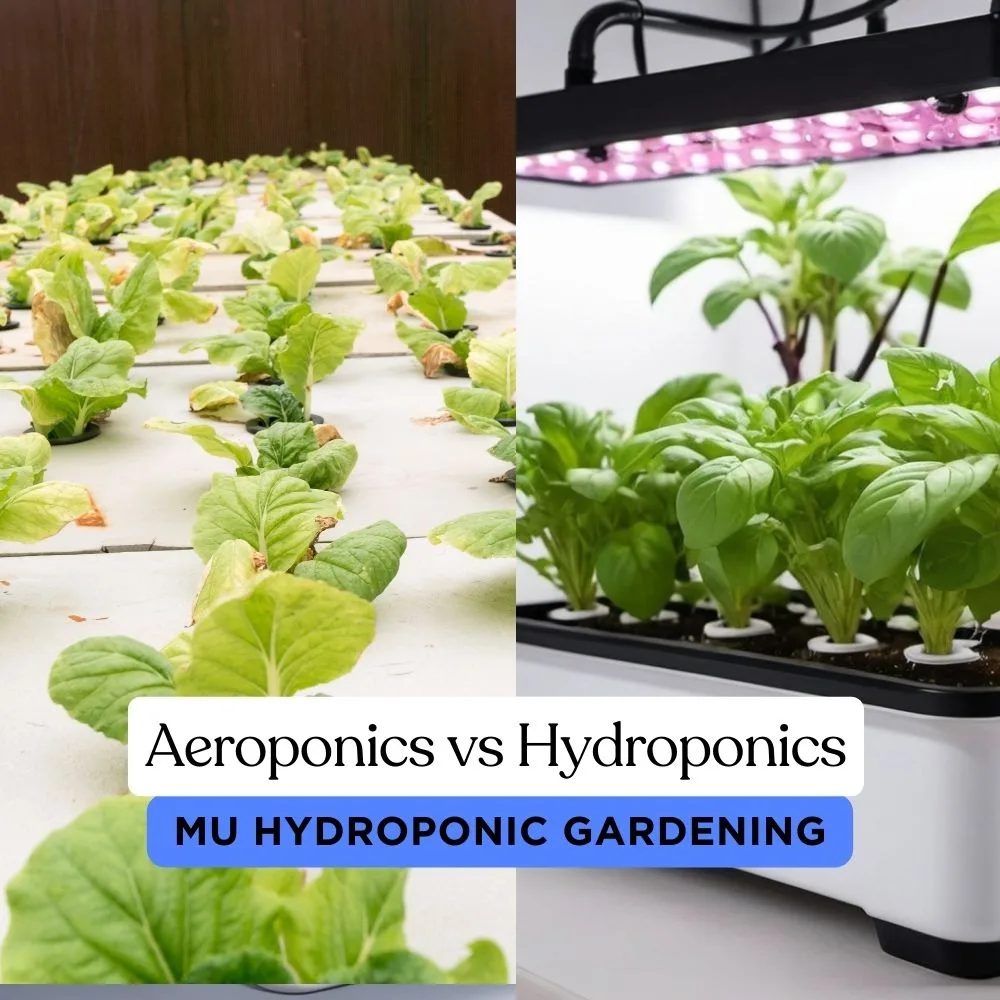
Aeroponics vs Hydroponics: Revolutionizing Agriculture in the 21st Century
As the world grapples with shrinking arable land, climate change, and growing food demands, innovative agricultural methods are becoming increasingly crucial. Among these, aeroponics and hydroponics stand out as promising solutions, offering the potential to grow crops in environments where traditional farming is impossible. This article delves into the comparison between these two soilless growing methods, exploring their principles, benefits, challenges, and future prospects.
Understanding the Basics
Hydroponics, derived from the Greek words ‘hydro’ (water) and ‘ponos’ (work), involves growing plants in nutrient-rich water without soil. Plants are typically supported by inert mediums like rockwool or perlite, with their roots directly exposed to or immersed in the nutrient solution. This method has been in use for decades and has seen widespread adoption in both commercial and hobby settings.
Aeroponics, on the other hand, combines ‘aero’ (air) with ‘ponos’, reflecting its unique approach. In aeroponic systems, plants are suspended in air, with their roots exposed and periodically misted with a nutrient-rich solution. This method, while newer and less common than hydroponics, is gaining traction due to its high efficiency and potential for maximizing crop yields.
Nutrient Delivery and Root Environment
The key difference between these systems lies in how they deliver nutrients to plants. Hydroponic systems either submerge roots in nutrient solutions or use various methods to circulate the solution past the roots. This constant exposure to water can sometimes limit oxygen availability to the roots.
Aeroponic systems, however, spray a fine mist of nutrient solution directly onto the suspended roots. This method provides maximum oxygenation to the roots, potentially leading to faster growth rates and higher yields. The increased oxygen exposure in aeroponics can result in more robust root development and overall plant health.
Both systems require careful management of nutrient composition, pH levels, and electrical conductivity to ensure optimal plant growth. However, aeroponic systems often demand more precise control and monitoring due to the critical nature of the misting process.
Resource Efficiency and Environmental Impact
One of the most significant advantages of both systems over traditional agriculture is their water efficiency. Hydroponic systems can use up to 90% less water than conventional farming, while aeroponic systems push this even further, using up to 95% less water. This efficiency is crucial in water-scarce regions and contributes to the sustainability of these methods.
In terms of nutrient use, aeroponic systems generally require less than hydroponic setups. Both methods allow for nutrient recycling, further improving their efficiency. Moreover, these controlled environment systems significantly reduce or eliminate the need for pesticides and herbicides, leading to cleaner, potentially healthier produce.
The environmental impact extends beyond resource use. By not requiring arable land, these methods can help preserve natural habitats. They also eliminate agricultural runoff, a major source of water pollution in traditional farming. The ability to grow crops vertically and in urban environments can reduce transportation needs, lowering the carbon footprint associated with food production.
Yield and Growth Rates
Both hydroponic and aeroponic systems can produce higher yields than traditional soil-based farming. Aeroponic systems often boast faster growth rates due to the increased oxygenation of roots. This can lead to more crop cycles per year, potentially increasing overall yield.
However, the choice of crops can influence the effectiveness of each system. Some plants are better suited to hydroponic environments, while others thrive in aeroponic setups. Leafy greens, herbs, and some fruiting plants have shown particularly good results in both systems.
Setup, Maintenance, and Economic Considerations
Initial setup costs for both hydroponic and aeroponic systems are typically higher than traditional farming methods. Aeroponic systems often have higher upfront costs due to the need for more sophisticated misting equipment and control systems. However, they may have lower ongoing expenses due to their higher efficiency.
Maintenance is crucial for both systems. Regular monitoring of nutrient levels, pH, and overall plant health is necessary. Aeroponic systems require additional attention to ensure misting nozzles remain unclogged and functioning correctly. Both methods benefit from automation, which can reduce labor costs but may increase initial investment.
While the high initial costs can be a barrier, both systems can offer good returns on investment due to higher yields, year-round production capabilities, and resource efficiency. The ability to grow crops near urban centers can also reduce transportation costs and increase product freshness, potentially commanding higher market prices.
Technological Advancements and Future Prospects
The integration of advanced technologies is rapidly enhancing the capabilities of both hydroponic and aeroponic systems. Internet of Things (IoT) sensors and artificial intelligence are being employed to optimize growing conditions, automate nutrient management, and predict potential issues before they arise. These advancements are making these systems more efficient, reliable, and accessible to a broader range of users.
Looking to the future, both methods are poised to play crucial roles in addressing global food security challenges. Their ability to produce food in urban environments, harsh climates, and even potentially in space makes them valuable tools in the face of climate change and population growth.
Challenges and Limitations
Despite their numerous advantages, both systems face challenges. The high initial costs can be prohibitive for small-scale farmers or in developing regions. Both methods rely heavily on technology and stable electricity supplies, which may not be available in all areas.
There’s also the issue of energy consumption, particularly in regions where renewable energy is not readily available. The carbon footprint of these systems can be significant if powered by non-renewable energy sources.
Additionally, while these methods excel at producing certain types of crops, they are not yet suitable for all types of agriculture. Grains and some other staple crops, for instance, are still more efficiently produced through traditional farming methods.
Conclusion
As we navigate the challenges of feeding a growing global population in the face of climate change and resource scarcity, innovative agricultural methods like hydroponics and aeroponics offer promising solutions. While both systems have their strengths and limitations, they represent significant advancements in agricultural technology.
Hydroponics offers a more established, often simpler setup, making it accessible to a wider range of users. Aeroponics, with its higher efficiency and potentially faster growth rates, represents the cutting edge of soilless farming technology. Both methods contribute to more sustainable, resource-efficient food production.
As technology continues to advance and these systems become more refined and accessible, we can expect to see their increasing integration into our food production systems. Whether in vertical farms in urban centers, harsh environments where traditional agriculture is impossible, or even in future space colonies, hydroponics and aeroponics are set to play vital roles in the future of agriculture.
#1 Recommended Hydroponic Smart Kit | #2 Recommended Hydroponic Smart Kit |
| | |
Summary and FAQs
Which system is more water-efficient, aeroponics or hydroponics?
Aeroponics is generally more water-efficient than hydroponics. While hydroponic systems can use up to 90% less water than traditional farming, aeroponic systems push this even further, using up to 95% less water. This makes aeroponics particularly valuable in water-scarce regions.
Which method produces faster plant growth and higher yields?
Aeroponics often results in faster growth rates and potentially higher yields due to increased oxygenation of the roots. The suspended root system in aeroponics allows for maximum oxygen exposure, which can lead to more robust root development and overall plant health. However, actual yields can vary depending on the specific crop and system design.
What are the main differences in setup and maintenance between hydroponic and aeroponic systems?
Hydroponic systems typically have lower initial setup costs and are often simpler to maintain. They use inert growing mediums and submerge or circulate nutrient solutions around the roots. Aeroponic systems usually have higher upfront costs due to more sophisticated equipment (like misting nozzles) and require more precise control. Aeroponic systems need additional attention to ensure misting nozzles remain unclogged and functioning correctly.
Are hydroponics and aeroponics suitable for all types of crops?
While both systems excel at producing many types of crops, particularly leafy greens, herbs, and some fruiting plants, they are not yet suitable for all types of agriculture. Grains and some staple crops are still more efficiently produced through traditional farming methods. The choice of crops can influence the effectiveness of each system, with some plants better suited to hydroponic environments and others thriving in aeroponic setups.
How do hydroponic and aeroponic systems compare in terms of environmental impact?
Both hydroponic and aeroponic systems generally have a lower environmental impact compared to traditional farming. They significantly reduce water use, eliminate agricultural runoff, and often require fewer or no pesticides due to their controlled environments. They also don’t require arable land, helping to preserve natural habitats. However, their reliance on technology and electricity can lead to a higher carbon footprint if not powered by renewable energy sources. Between the two, aeroponic systems tend to be more resource-efficient, potentially giving them a slight edge in environmental impact.